


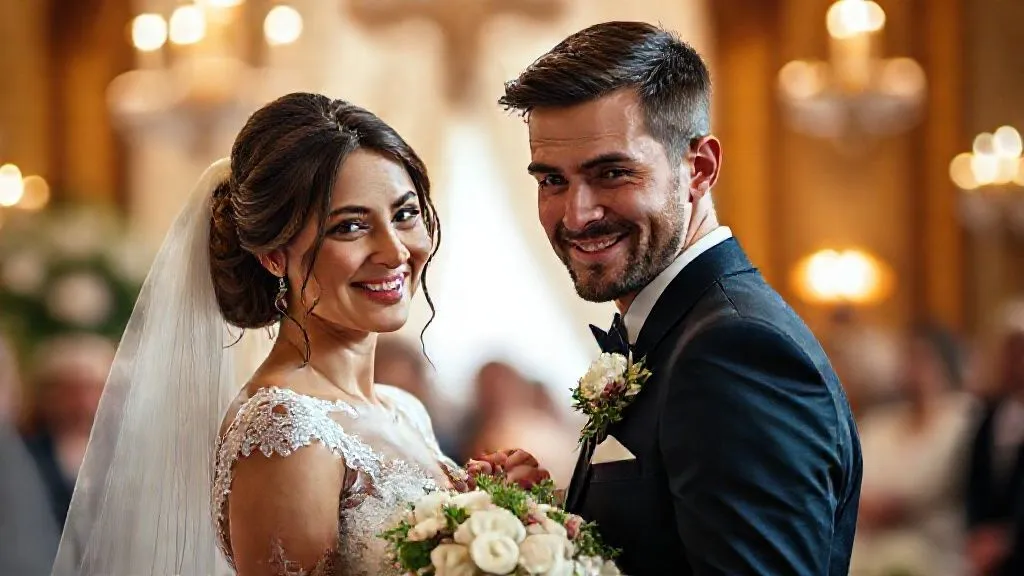
Urgent: How to Recover from Forgetting Wedding Vows Mid-Delivery?
For over two decades in the wedding industry, I've witnessed countless beautiful ceremonies, each unique, each filled with its own brand of magic. And in that time, I've also seen the momentary flicker of panic, the slight stumble, the sudden blank stare when a person, overwhelmed by emotion and the gravity of the moment, forgets their carefully crafted wedding vows mid-delivery. It's a moment that, while brief, can feel like an eternity to the person experiencing it. Trust me, you are not alone.
This isn't a sign of forgetting your love or commitment; it's a testament to the immense pressure, the surging emotions, and the sheer significance of standing before your beloved and your closest friends and family. The human brain, under such conditions, can sometimes play tricks, making even the most memorized lines vanish into thin air. The problem isn't the lapse in memory; it's the fear of how to gracefully recover, to salvage the moment without adding an awkward silence or a stumble that detracts from the profound beauty of your commitment.
But here's the good news: forgetting your vows doesn't have to derail your ceremony. In fact, with the right strategies, it can become a charming, authentic moment that adds to the story of your day. I'm here to equip you with actionable frameworks, real-world insights, and expert tips to not only recover flawlessly from forgetting your wedding vows mid-delivery but to do so with grace, confidence, and genuine warmth. We'll turn a potential mishap into a memorable testament to your humanity and connection.
The Inevitable Pause: Embracing Imperfection with Poise
The first and most crucial step in recovering from a mid-vow blank is to acknowledge and embrace the pause. In our hyper-perfected world, we often fear any deviation from the script, especially on such a monumental day. However, I've learned that authenticity often trumps perfection. A brief, genuine pause can actually heighten the emotional impact of your vows, allowing everyone, including yourselves, to breathe and reconnect with the moment.
Think of it as a natural beat in a song, or a dramatic pause in a powerful speech. It's not a failure; it's an opportunity. The key is how you carry yourself through that pause. A look of sheer panic will make everyone uncomfortable, but a slight smile, a deep breath, and a moment of genuine connection with your partner can transform the atmosphere. According to a study published in the Harvard Business Review on public speaking, moments of vulnerability, when handled with grace, can significantly increase audience engagement and empathy. Your wedding is no different.
"The most beautiful moments in life are rarely perfectly choreographed. They are often found in the spontaneous, the authentic, and the human." - Industry Veteran Insight
Instead of battling the blank, lean into it. Let your partner's presence ground you. This isn't just about remembering words; it's about remembering why you're there. That shared look, that quiet understanding, is far more powerful than any perfectly recited line. It’s a silent vow in itself, a testament to your unspoken bond.
Your First Move: The Power of a Breath and a Smile
When those words vanish, your immediate physical response can dictate the entire trajectory of the moment. Panic often leads to a tightening of the chest, shallow breathing, and a fixed, anxious stare. My advice? Counteract this with deliberate, calming actions.
- Take a Deep, Visible Breath: Don't hide it. Let your chest rise, let your shoulders relax. This isn't just for you; it signals to everyone present that you're taking a moment to compose yourself, not to panic. It's a powerful non-verbal cue that you're in control, even if your mind feels temporarily adrift.
- Lock Eyes with Your Partner: This is your anchor. Forget the guests, forget the officiant for a second. Look into the eyes of the person you are marrying. Their presence is your comfort, your reason. This connection will often jog your memory, or at the very least, remind you of the profound love that makes the words secondary.
- Offer a Genuine, Soft Smile: A small, authentic smile communicates humanity and warmth. It says, 'Oh, isn't this just like me?' or 'We're doing this, aren't we?' It diffuses tension, invites empathy, and shows that you're enjoying the moment, even its unexpected turns.
- Acknowledge with a Lighthearted Remark (Optional): If you feel comfortable, a quick, self-deprecating but sweet remark can work wonders. Something like, "Well, this is going well!" with a chuckle, or "My heart's just a little full right now." Keep it brief and don't dwell. This shows confidence and charm, turning a hiccup into a memorable, endearing moment.

These initial steps are about resetting your internal state and signaling to your audience that everything is fine. It’s about owning the moment, not being owned by it. Remember, everyone wants you to succeed. They are rooting for you, and they will appreciate your authenticity far more than a robotic recitation.
The Lifeline: Discreet Prompts and Partner Support
Even with a calm demeanor, the words might still be elusive. This is where preparation for an emergency prompt comes into play, and where the synergy with your partner truly shines. I always advise couples to have a plan for this very scenario.
Case Study: Sarah & Mark's Vow Recovery
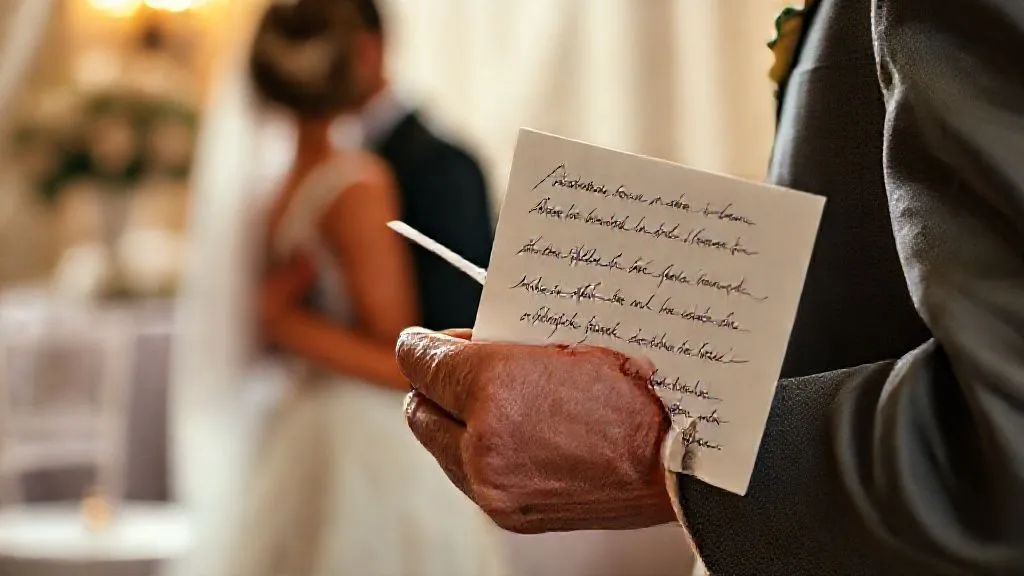
Sarah and Mark, a couple I worked with last year, were deeply in love but both prone to public speaking jitters. We planned for the worst. Mark had his vows written on a small, elegantly folded card tucked into his jacket pocket. Sarah had hers on her phone, accessible with a single tap, discreetly held in her bouquet. During the ceremony, Mark, halfway through a particularly heartfelt section, went completely blank. He took a visible breath, smiled at Sarah, and then, with a practiced, smooth motion, retrieved his card. He didn't apologize; he simply continued, his voice regaining its rhythm. It was so seamless, many guests barely noticed the pause. This resulted in a beautiful, authentic moment that showcased their preparedness and mutual support, rather than a moment of panic. The recovery was so graceful, it became a talking point of admiration, not embarrassment.
Here are your lifelines:
- The Discreet Prompt Card: Have your vows written clearly on a small, elegant card. This isn't cheating; it's smart preparation. Practice pulling it out smoothly and reading from it naturally. The officiant can also hold a copy.
- The Officiant's Cue: Often, your officiant will have a copy of your vows. A quick, subtle glance or a pre-arranged signal can prompt them to quietly whisper the next line or point to your card. Discuss this beforehand!
- Your Partner's Support: Your partner is your best resource. They know your vows. A gentle, almost imperceptible whisper, a shared knowing glance, or even just their steady presence can be enough to trigger your memory. Practice this subtle interaction during rehearsals.
- The 'Love Letter' Option: If your vows are long or particularly complex, consider writing them as a 'love letter' you read aloud. This makes it entirely natural to read from a card or sheet, eliminating the pressure of memorization altogether.
| Recovery Strategy | Immediate Action | Effectiveness |
|---|---|---|
| Deep Breath & Smile | Calms nerves, signals composure | High for initial reset |
| Discreet Prompt Card | Provides exact words | Very high for full recovery |
| Partner's Whisper/Cue | Personal, intimate reminder | High, strengthens bond |
| Officiant's Help | External, professional support | High, if pre-arranged |
| Lighthearted Remark | Diffuses tension, adds charm | Moderate, depends on comfort level |
Remember, the goal is a beautiful, meaningful exchange of vows. How you get there, whether through perfect recitation or a graceful recovery with a little help, is secondary to the profound commitment you are making.
Mastering the Art of Impromptu Delivery (When Words Fail)
Sometimes, even with prompts, the exact words might not return, or you might feel a spontaneous urge to speak from the heart. This is where the art of impromptu delivery comes in. As a seasoned expert in wedding speeches, I've seen some of the most powerful vows delivered when a person abandons the script and simply speaks from their soul.
If you find yourself truly stuck, and your prepared words are gone, pivot. Look directly at your partner and simply state, in your own words, what they mean to you. What do you promise them? What future do you envision? What qualities do you love most about them? This isn't about perfectly formed sentences; it's about raw, honest emotion.
- Focus on Key Themes: You wrote your vows for a reason. What were the core promises, the central emotions? Even if you can't recall the exact phrasing, you can often remember the essence. "I promised to always support you, to make you laugh, and to face every challenge by your side. And I mean that."
- Use 'I Promise' Statements: These are simple, powerful, and easy to recall. "I promise to love you fiercely. I promise to be your rock. I promise to choose you, every single day."
- Speak from the Heart: This is your superpower. Your partner knows you, and they will recognize the genuine emotion behind your impromptu words. Sometimes, these unscripted moments are the most moving.
- Keep it Brief: If you're improvising, don't try to fill five minutes. A few heartfelt sentences are far more impactful than a rambling attempt to recreate your original vows.
As renowned public speaking coach, Toastmasters International, emphasizes, authenticity and connection are paramount in any speech. Your wedding vows are the ultimate expression of this principle. Your partner wants to hear *you*, not a perfect recitation.
When All Else Fails: The 'Love Letter' Option & Collective Support
There are rare instances where the words simply won't come, and the pressure feels too immense. In such extreme cases, remember you have a support system. Your officiant, your partner, and even your guests are there to witness your union, not judge your performance.
I've seen officiants step in with incredible grace, offering to read a portion of the vows for the struggling partner, or guiding them with leading questions that require only simple 'I do' answers. This isn't a failure; it's a beautiful demonstration of the community's support for your marriage.
Another powerful option, particularly if you find yourself completely overwhelmed, is to say, "I'm so overcome with emotion, I just need a moment to collect myself, but my vows are written here, and they come from my deepest heart." Then, with your officiant's help, you could briefly summarize the essence, or even have the officiant read them as a declaration on your behalf. This maintains the integrity of your commitment without forcing you through a moment of extreme discomfort.
"A wedding is a celebration of love, not a test of memory. Prioritize the feeling, and the words will find their way, one way or another." - Wedding Vows Specialist
What truly matters is the intention, the commitment, and the love. The specific phrasing of your vows, while important, is secondary to the profound act of choosing to spend your life with another person. The collective energy of a wedding is one of love and support; lean into that.
Post-Vow Poise: Owning the Moment
Once you've navigated the moment of forgetting, whether by recovery or improvisation, the key is to move forward with confidence and joy. Don't dwell on it. Don't apologize excessively. The moment has passed, and you've handled it with grace.
- Re-engage with Your Partner: A loving glance, a squeeze of the hand, a private smile. Reaffirm your connection immediately after the vows.
- Embrace the Celebration: As the ceremony continues, immerse yourself in the joy. Laugh, smile, and let the love flow.
- Don't Self-Deprecate Later: Resist the urge to bring it up in conversations later, unless it's to share a funny, lighthearted anecdote. "Well, that was a moment, wasn't it? My mind just went blank!" but don't let it overshadow the beauty of the day.
Your guests will likely remember your genuine emotion and how you handled the moment with poise, far more than the actual memory lapse. In fact, it often makes the moment more real, more human, and ultimately, more endearing. This concept aligns with psychological research on the American Psychological Association's findings on the 'peak-end rule,' where people remember the most intense points of an experience and its end, rather than every detail. Make your recovery a peak moment of authenticity.
Preventing Future Mishaps: Preparation is Key
While we've focused on recovery, the best defense is a good offense. As an industry specialist, I always emphasize proactive preparation to minimize the chances of forgetting your wedding vows mid-delivery. This isn't about memorizing perfectly; it's about building comfort and familiarity.

- Practice, Don't Memorize: Read your vows aloud multiple times in the days leading up to the wedding. Don't try to rote memorize them. Instead, familiarize yourself with the flow, the rhythm, and the key phrases. This builds muscle memory for your voice and brain.
- Break It Down: If your vows are long, break them into smaller, manageable sections. Focus on remembering the first few words of each paragraph or theme.
- Visual Cues: Associate parts of your vows with specific memories, feelings, or even objects. For example, "When I speak about your kindness, I'll think of the time you helped me with X."
- The Vow Card: I cannot stress this enough. Always have a physical copy of your vows, neatly written or printed. Give one to your officiant, and have one easily accessible for yourself (e.g., in your jacket pocket, in your partner's bouquet, or held by a trusted bridal party member).
- Rehearsal is Crucial: During the rehearsal, practice saying your vows, even if you just mumble through them. This helps you get comfortable with the physical space, the standing position, and the feeling of speaking in that setting.
- Mindfulness and Breathing Exercises: On the day of the wedding, take moments for deep breathing and mindfulness. This can significantly reduce anxiety and help you stay present and focused.
By investing a little time in these preventative measures, you empower yourself to deliver your vows with confidence, knowing you have a safety net in place should you need it. It’s about being prepared for the joyous journey, including its unexpected turns.
Frequently Asked Questions (FAQ)
Question? Is it common for people to forget their wedding vows?
Answer: Absolutely, it's far more common than most people realize. The combination of high emotion, adrenaline, and the pressure of being the center of attention can easily cause a temporary mental blank. It's a natural human response, not a sign of lacking commitment or love. Many couples experience this to some degree, from a slight stumble to a complete memory lapse.
Question? Should I apologize if I forget my vows?
Answer: A brief, lighthearted acknowledgment with a smile is perfectly fine and can even be endearing. Something like, "My heart's just a little too full right now!" or "Forgive me, I just got lost in your eyes." However, avoid lengthy or overly apologetic statements that dwell on the mistake. The goal is to recover smoothly and continue celebrating the moment, not to apologize for being human.
Question? What if my partner forgets their vows? How can I help them?
Answer: Your role is to be a supportive anchor. Lock eyes with them, offer a reassuring smile, and if you've pre-arranged a signal with the officiant or have a discreet way to prompt them (like a quiet whisper of the next line if you know it), use it gently. Your calm presence and unwavering love will be their greatest comfort and help them regain their composure.
Question? Is it better to read vows or memorize them?
Answer: This is a personal choice, but as an expert, I lean towards having them written down, even if you intend to memorize them. Reading from a beautifully prepared vow card ensures you deliver exactly what you intended, reduces anxiety, and allows you to focus on the emotion rather than recall. If you choose to memorize, still have the card as a safety net. It's about confidence, not perfection.
Question? Will forgetting my vows ruin the ceremony or my partner's perception of me?
Answer: Absolutely not. In my extensive experience, such moments, when handled with grace and authenticity, often become cherished anecdotes. They highlight your humanity, the genuine emotion of the day, and your ability to navigate unexpected challenges together. Your partner, and your guests, will remember your love and your poise, not a momentary lapse. It adds to the unique story of your wedding day.
Key Takeaways and Final Thoughts
Navigating the unexpected blank during your wedding vows might seem daunting, but it's a moment you can absolutely master with grace and authenticity. Remember these critical takeaways:
- Embrace the Pause: A moment of silence can be powerful, not awkward, if handled with composure.
- Breathe, Smile, Connect: Your immediate actions set the tone for recovery. Look at your partner, breathe deeply, and offer a genuine smile.
- Utilize Your Lifelines: Always have a vow card ready, communicate with your officiant, and lean on your partner's support.
- Speak from the Heart: If the words truly vanish, pivot to heartfelt, impromptu declarations of love and commitment.
- Move Forward with Poise: Once recovered, don't dwell. Re-engage with the joy of your ceremony.
- Prepare Proactively: Practice for familiarity, not memorization, and always have a written copy.
Your wedding day is a celebration of your unique love story, and sometimes, the most memorable parts are the unscripted ones. Forgetting your wedding vows mid-delivery isn't a catastrophe; it's an opportunity to showcase your resilience, your humanity, and the profound, undeniable connection you share with your partner. Trust in your love, trust in your preparation, and know that you have all the tools to turn any momentary lapse into a beautiful, authentic chapter of your wedding day narrative. Go forth and marry with confidence!
Recommended Reading
- Rescue Your Wedding Decor: 5 Steps for Tricky Venue Color Restrictions
- 5 Rapid Ways to Adjust Wedding Menu Cards for Unexpected Guests
- 9 Proven Ways to Stop Wedding Cupcake Frosting Melt Outdoors
- Prevent Naked Wedding Cakes Drying: 5 Pro Tips for Perfect Moisture
- Chaos to Calm: 5 Steps for Bridal Shower Gift Opening with 50+ Guests?



Comments
Leave a comment below. Your email will not be published. Required fields marked with *