


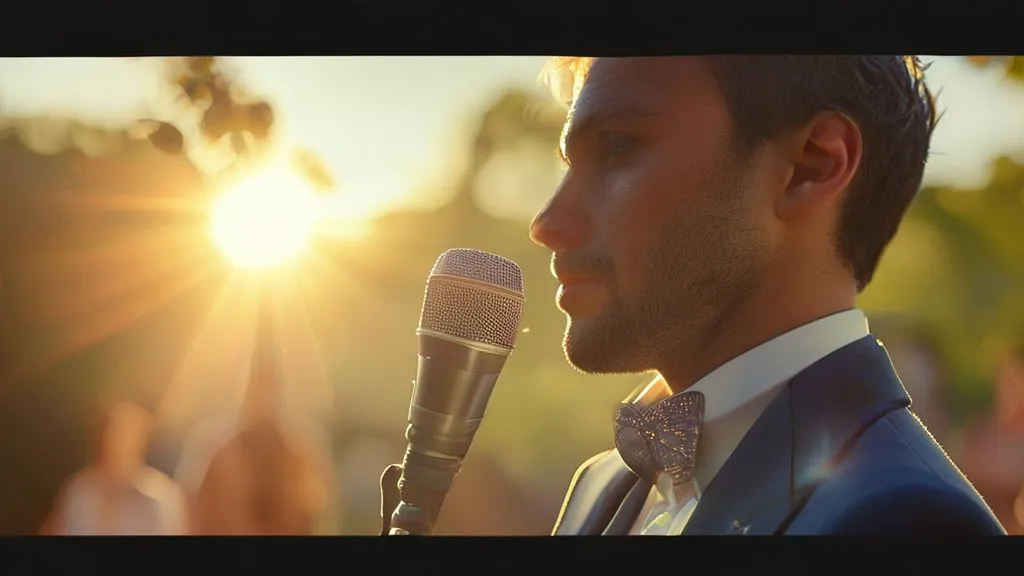
How to Prevent Audio Dropouts During Outdoor Wedding Vows?
For over 18 years in the wedding industry, specializing in sound, I've witnessed countless beautiful moments unfold. But I've also felt the collective gasp, the sudden silence, and the palpable disappointment when a crucial 'I do' or a heartfelt vow is swallowed by an audio dropout. It’s a moment of pure agony for everyone involved, especially the couple.
Outdoor weddings, with their stunning backdrops and natural ambiance, introduce a unique set of challenges for sound systems. Wind, unpredictable radio frequency (RF) interference, line-of-sight issues, and even battery life can conspire to silence those precious words, turning a dream moment into an anxious memory.
But it doesn't have to be this way. In this definitive guide, I'll share battle-tested strategies, expert insights, and actionable frameworks that I've refined over nearly two decades. You'll learn not just what causes dropouts, but precisely how to prevent audio dropouts during outdoor wedding vows, ensuring every word is heard, crystal clear, forever etched in memory.
Understanding the Outdoor Audio Battlefield: Why Dropouts Happen
Before we can prevent audio dropouts during outdoor wedding vows, we must understand their root causes. The outdoor environment is an entirely different beast compared to a controlled indoor setting. It's a complex interplay of physics and unseen forces that can wreak havoc on your audio signal.
The Invisible Enemies: RF Interference and Signal Congestion
Wireless microphones operate on radio frequencies. In today's hyper-connected world, the airwaves are crowded. Wi-Fi networks, Bluetooth devices, cell towers, emergency services, and even other wireless audio systems can all operate on similar frequencies, leading to signal collision – or what we commonly call interference.
"Think of it like trying to have a clear conversation in a bustling, crowded market. Everyone is talking, and it's hard to hear your own voice, let alone someone else's. That's what your wireless microphone is up against in a congested RF environment."
This interference is often the primary culprit behind intermittent audio dropouts. Without proper frequency coordination and scanning, you're essentially gambling with your sound.
Line of Sight and Distance Limitations
Wireless signals, especially those from professional-grade microphones, prefer a clear, unobstructed path between the transmitter (the microphone) and the receiver. Any physical barrier – trees, tents, large groups of people, or even the officiant's body – can attenuate or block the signal. The further the distance, the weaker the signal becomes, making it more susceptible to interference and dropouts.
Environmental Factors: Wind, Humidity, and Power Fluctuations
While not direct causes of signal dropouts, environmental factors can significantly impact the reliability of your system. Strong winds create noise that can mask speech, making it seem like a dropout. Humidity can affect equipment performance, and fluctuating power from generators or unstable outlets can cause receivers to malfunction or reset, leading to momentary (or prolonged) silence.
The Foundation: Choosing the Right Wireless Microphone System
Your choice of wireless microphone system is the bedrock of reliable outdoor wedding audio. This isn't an area to cut corners; investing in quality pays dividends in peace of mind.
Digital vs. Analog: A Critical Choice for Clarity
Historically, analog wireless systems were the standard. They transmit audio as a radio wave directly. While reliable in clear environments, they are more susceptible to noise and interference, especially at longer distances or in crowded RF spaces. Digital wireless systems, on the other hand, convert audio into digital data, encrypt it, and then transmit it. This process makes them far more resistant to interference and often provides a clearer, more consistent signal.
For outdoor weddings, where the RF environment is often unpredictable, I almost exclusively recommend professional digital wireless systems. They offer superior sound quality, greater operating range, and significantly reduced susceptibility to dropouts. Learn more about the differences between digital and analog wireless systems.
Frequency Diversity and True Diversity Systems
When selecting a system to prevent audio dropouts during outdoor wedding vows, look for receivers with 'true diversity' or 'frequency diversity' capabilities.
- True Diversity: These receivers have two separate antenna systems and internal receivers. They constantly monitor both signals and seamlessly switch to the stronger, clearer one, minimizing dropouts caused by multipath interference (where the signal bounces off surfaces).
- Frequency Diversity: This advanced technique involves transmitting the same audio signal on two different frequencies simultaneously. If one frequency experiences interference, the other can take over, providing an incredibly robust and reliable link. While more expensive, it's the gold standard for mission-critical audio.
Always prioritize systems from reputable manufacturers like Shure, Sennheiser, Audio-Technica, or Lectrosonics. Their professional lines are engineered for reliability in challenging environments.

Strategic Placement and Antenna Optimization
Even the best equipment can fail if not deployed correctly. Placement of your wireless receiver and its antennas is absolutely critical for maintaining a strong, stable signal.
Receiver Placement: The Unsung Hero of Signal Integrity
The closer your wireless receiver is to the microphone transmitter, the stronger the signal. This might seem obvious, but I've seen countless setups where the receiver is tucked away at a distant mixing board, leading to avoidable issues.
- Proximity is Key: Position the receiver as close as possible to where the vows will be exchanged. Ideally, within 50-75 feet, with a clear line of sight.
- Line of Sight: Ensure there are no physical obstructions between the transmitter (mic on the couple/officiant) and the receiver's antennas. This means no trees, no large decorative elements, and crucially, no people standing directly in the signal path.
- Elevate the Receiver: Raising the receiver and its antennas above head height helps clear immediate obstacles and reduces the chance of people blocking the signal. A light stand or tripod is perfect for this.
- Avoid RF Noise Sources: Keep the receiver away from large LED screens, Wi-Fi routers, power cables, and other electronic devices that can emit RF noise.
Antenna Type and Position: Your System's "Ears"
The antennas are the "ears" of your wireless system. How they are positioned and what type they are makes a huge difference. Most entry-level systems come with omnidirectional antennas, which pick up signals from all directions. While versatile, they also pick up more potential interference.
For critical outdoor applications, I often use directional antennas (like paddle antennas). These focus their reception pattern, allowing you to "point" them directly at the microphone's expected location, significantly improving signal-to-noise ratio and reducing unwanted interference.
"Think of omnidirectional antennas as a wide-angle lens, capturing everything. Directional antennas are like a telephoto lens, focusing precisely on your subject. For wedding vows, you want that precise focus."
Proper angling is also vital. Antennas should generally be set at a 45-degree angle in a "V" shape. This diverse orientation helps capture the signal regardless of how the transmitter might be moving or oriented.
| Antenna Type | Coverage | Interference Susceptibility | Best Use |
|---|---|---|---|
| Omnidirectional | 360 degrees | Higher | Small areas, less critical applications |
| Directional (e.g., Paddle) | Focused beam | Lower | Outdoor, critical applications, longer range |
| Helical | Very focused, circular | Lowest | Very long range, complex RF environments |
Frequency Coordination: Your Dropout Prevention Blueprint
This is arguably the most crucial step to prevent audio dropouts during outdoor wedding vows. You cannot simply turn on a wireless mic and hope for the best. You must actively manage the RF spectrum.
Scanning the RF Spectrum: Don't Guess, Measure
Before the wedding day, and ideally again on the day of, you need to scan the local radio frequency environment. Professional wireless systems often have built-in scanning features, or you can use a dedicated RF spectrum analyzer. This process identifies clear, open frequencies and reveals potential sources of interference.
The goal is to find frequencies that are completely free of other signals. In densely populated areas or near major highways, this can be challenging, but it's not impossible with the right tools and expertise.
Identifying and Selecting Clear Frequencies
Once you've scanned, select frequencies that are clear and have sufficient "buffer" space from other active signals. Avoid frequencies used by local TV stations, emergency services, or known Wi-Fi channels. Many manufacturers provide guides or software to help with this. Always check the FCC database for frequency allocations in the USA to avoid illegal or highly congested bands.
Dynamic Monitoring and Adjustment: The Lakeside Wedding Save
RF environments are not static; they can change throughout the day. A broadcast truck might park nearby, or a new Wi-Fi network could come online. A professional audio technician will monitor the RF spectrum throughout the event, ready to switch frequencies if interference is detected.
Case Study: The Lakeside Wedding Save
I once worked a beautiful lakeside wedding where the initial frequency scan showed a perfectly clear channel. However, just an hour before the ceremony, a large boat docked nearby, equipped with powerful marine radio and Wi-Fi systems. Suddenly, our primary mic channel was riddled with interference. Thanks to real-time RF monitoring and having backup frequencies pre-scanned, I was able to seamlessly switch to a clear channel moments before the vows began. The couple had no idea anything was amiss, and their vows were perfectly clear. This proactive approach, not just pre-planning, but also real-time monitoring, is essential to prevent audio dropouts during outdoor wedding vows.
Power Management and Backup Protocols
Many audio dropouts are not signal-related but simply power failures. This is an area where diligence prevents disaster.
Fresh Batteries: The Simplest, Most Overlooked Cause of Failure
This cannot be stressed enough: Always use fresh, high-quality alkaline or rechargeable batteries for your wireless transmitters. Do not trust batteries that have been sitting around or partially used. I always swap batteries just before the ceremony, even if the old ones still show 'full' on the meter. Battery meters can be unreliable, and a dying battery is a guaranteed dropout.
External Power Solutions and UPS for Receivers
While transmitters run on batteries, receivers typically plug into AC power. If you're using generator power outdoors, ensure it's stable and conditioned. Fluctuations can cause receivers to momentarily lose power and reset. A small Uninterruptible Power Supply (UPS) for your receiver rack can provide clean, stable power and a crucial buffer against unexpected power flickers.
The Redundancy Principle: Always Have a Backup
In the world of live sound, we live by the mantra: "Two is one, one is none." For wedding vows, redundancy is non-negotiable.
"Never rely on a single point of failure. If one system goes down, you must have an immediate, seamless alternative ready to go. This is fundamental to prevent audio dropouts during outdoor wedding vows."
Consider these backup options:
- Second Wireless System: A completely separate wireless mic system on a different frequency, ready to be switched on.
- Wired Lavalier Mic: A small, discreet wired lavalier mic clipped to the officiant or groom, with a long cable running to the mixer.
- Handheld Mic: A wired handheld microphone discreetly placed near the officiant, ready to be quickly grabbed if needed.
- Recording: Always record the audio directly from the mixer to a separate device. Even if the live sound fails, the recording might be salvageable for video.

The Human Element: Professional Audio Technicians
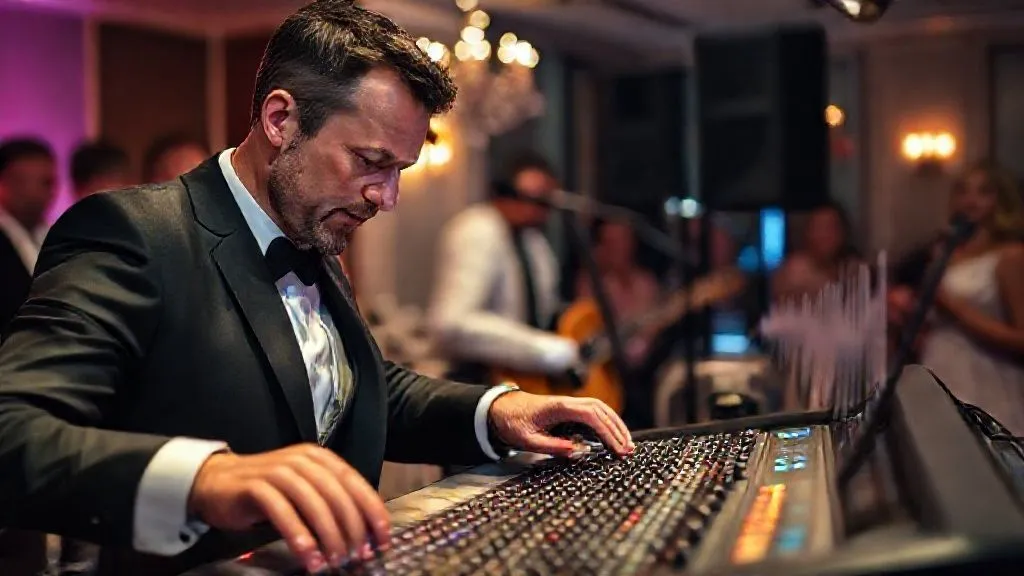
While this guide provides comprehensive strategies, the single most effective way to prevent audio dropouts during outdoor wedding vows is to hire an experienced, professional audio technician.
Why DIY Can Be Risky for Critical Moments
Many wedding planners or DJs offer basic sound services, but the nuances of outdoor wireless audio require specialized knowledge. It's not just about plugging in a microphone; it's about understanding RF physics, troubleshooting complex signals, and making real-time adjustments under pressure. The cost of a professional is a tiny fraction of the emotional cost of ruined vows.
What a Pro Brings to the Table
An experienced audio technician brings:
- Specialized Equipment: Professional-grade wireless systems, RF scanners, directional antennas, and backup gear.
- Expertise: Years of experience troubleshooting, frequency coordinating, and optimizing sound in various environments.
- Proactive Problem Solving: They anticipate potential issues and have contingency plans in place.
- Peace of Mind: You, your wedding planner, and the couple can relax, knowing the most critical audio moment is in expert hands.
When searching for a professional, look for specialists in live event audio, particularly those with wedding experience. An organization like the National Systems Contractors Association (NSCA) or local AV rental companies can often provide recommendations for qualified technicians.
Pre-Ceremony Checks and Rehearsal Best Practices
Thorough preparation is the final layer of defense against audio dropouts. Don't skip these vital steps.
The Full System Test: Day Of and Day Before
Never assume everything will work perfectly on the day. Always conduct a full system test in the exact location where the vows will occur. This means:
- Powering on all equipment.
- Testing each microphone individually.
- Walking the full perimeter the speaker might cover to check for dead spots.
- Checking all cables and connections.
Ideally, this test should happen at least a day before, allowing time to address any issues. A final, quick check should be performed an hour before guests arrive.
Communication with Officiant and Couple: Mic Technique Matters
Even with the best equipment, poor microphone technique can lead to dropouts or unintelligible audio. Briefly instruct the officiant and couple on:
- Mic Placement: How to wear the lavalier mic (typically clipped to the lapel, about 6-8 inches from the mouth).
- Speaking Volume: Encourage them to speak clearly and at a consistent volume.
- Staying in Range: Remind them to remain within the designated area where the wireless signal is strongest.
A quick sound check during the rehearsal is invaluable for this.
Environmental Monitoring: Wind and Unexpected Noise
On the wedding day, keep an eye (and ear) on the environment. Is the wind picking up significantly? Are there new, unexpected noise sources (e.g., construction nearby, a loud boat passing)? While you can't control the weather, you can be prepared. Have wind muffs (foam or fur 'dead cats') ready for lavalier mics to minimize wind noise, which can often be mistaken for signal issues.
Frequently Asked Questions (FAQ)
Can I use multiple wireless mics without interference? Yes, but it requires careful frequency coordination. Each wireless mic needs its own clear frequency channel that doesn't interfere with others. A professional audio technician will use an RF scanner and coordination software to assign non-interfering frequencies to all your wireless devices. Without this, you're almost guaranteed to have interference and dropouts.
What if my venue has poor cell service, does that affect wireless mics? Not directly. Cell service operates on different frequency bands than most professional wireless microphones. However, if your wireless mics are operating in a band close to cellular frequencies, or if there's a very powerful local cell tower, there could be some incidental interference. The primary concern with cell service is usually the lack of connectivity for other devices, not your audio. Always rely on a dedicated RF scan, not cell signal strength, to determine clear frequencies.
Is it better to rent or buy a sound system for an outdoor wedding? For most couples, renting a professional-grade sound system from a reputable AV company is the best option. High-quality wireless systems are a significant investment, and they require ongoing maintenance and technical understanding. Renting ensures you get the latest, well-maintained equipment, often with the option of a skilled technician to operate it. Buying is only advisable for individuals or companies who frequently host events and have the expertise to manage the equipment.
How far can wireless mics typically transmit outdoors? The range varies significantly based on the system's power output, antenna type, frequency band, and environmental conditions. Professional systems can typically achieve reliable ranges of 100-300 feet (30-90 meters) or more with clear line of sight and proper antenna placement. However, for critical applications like wedding vows, I always recommend keeping the transmitter and receiver within 50-75 feet (15-23 meters) to maximize signal strength and reliability.
What's the biggest mistake people make with outdoor wedding audio? The biggest mistake is underestimating the complexity of outdoor sound and failing to engage a professional. Many assume a simple plug-and-play approach will suffice, leading to reliance on consumer-grade gear, no frequency coordination, and inadequate backup plans. This often results in preventable audio dropouts and immense stress on a day that should be joyous. Prioritizing expert planning and execution is key to prevent audio dropouts during outdoor wedding vows.
Key Takeaways and Final Thoughts
Ensuring crystal-clear audio for outdoor wedding vows is a nuanced challenge, but one that is entirely conquerable with the right approach. Having navigated these waters for nearly two decades, I can confidently say that preparedness, quality equipment, and expert execution are your best allies.
- Invest in Quality: Choose professional-grade digital wireless systems with diversity features.
- Optimize Placement: Position receivers close to the action, with clear line of sight and elevated antennas.
- Coordinate Frequencies: Scan the RF spectrum and select clear channels, monitoring dynamically.
- Prioritize Power: Always use fresh batteries and ensure stable power for receivers, with UPS backups.
- Embrace Redundancy: Have multiple backup audio solutions ready for immediate deployment.
- Hire an Expert: A professional audio technician is the single best investment for peace of mind and flawless execution.
Your wedding day is a once-in-a-lifetime event, and those vows are the heart of it all. By implementing these strategies, you're not just preventing technical glitches; you're safeguarding memories, ensuring that every heartfelt word is captured and cherished. Don't let a technical oversight overshadow a moment of pure magic. With careful planning and the right expertise, your outdoor wedding vows will be heard perfectly, a testament to your love, clear as a bell.
Recommended Reading
- Unveiling Elegance: What Paper Types for Custom Wedding Invites?
- 5 Expert Ways Wedding Planners Resolve Guest Dress Code Disputes
- Uninvited Kids? 5 Steps to Handle Child-Free Wedding Crashers
- The Ultimate Guide: How to Calculate Dessert Portions for Your Wedding Table with Confidence
- 5 Proven Strategies: Mitigating Honeymoon Travel Disruptions for Client Satisfaction



Comments
Leave a comment below. Your email will not be published. Required fields marked with *