


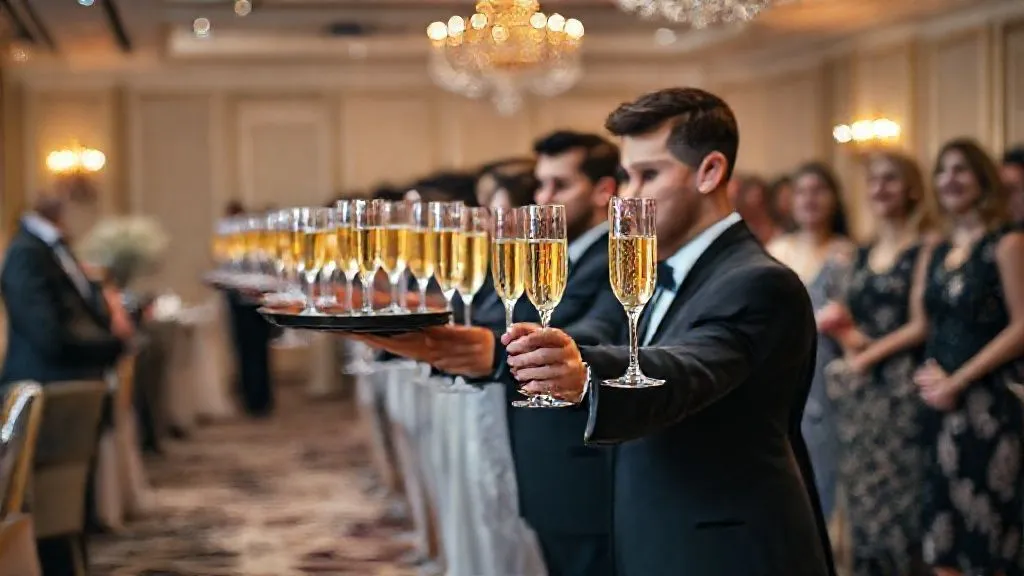
How to serve 200 champagne toasts simultaneously without chaos?
For over 15 years in the wedding industry, I’ve witnessed countless magical moments, but I’ve also seen the silent panic when a couple realizes their grand champagne toast might devolve into a logistical nightmare. The vision of a unified, sparkling moment can quickly shatter when servers scramble, guests wait, and champagne inevitably gets warm. It's a critical point in the celebration, one that demands precision and grace.
The problem is universal for larger weddings: how do you deliver 200 (or more!) perfectly chilled flutes of champagne, simultaneously, to eager guests without bottlenecks, spills, or embarrassing delays? It’s not just about having enough bottles; it’s about orchestrating a ballet of service, ensuring every guest feels included in that communal clink of glasses. The fear of chaos can overshadow the joy, leaving couples anxious about a moment that should be pure celebration.
In this definitive guide, I’ll share the exact frameworks, staff training insights, and logistical blueprints I’ve refined over decades. You’ll learn how to plan, prepare, and execute a flawless champagne toast for 200 guests or more, transforming potential pandemonium into an unforgettable, elegant spectacle. We’ll cover everything from precise staffing ratios to pre-chilling strategies and the art of synchronized serving, ensuring your wedding toast is nothing short of perfection.
The Foundation: Strategic Planning & Venue Assessment
Before a single bottle is ordered or a server is briefed, the real work begins with meticulous planning. A successful champagne toast for 200 guests isn't an accident; it's the result of foresight and a deep understanding of your event space and guest flow. I always emphasize that the plan on paper should anticipate every potential hiccup.
Understanding Your Venue's Flow
Every venue has its unique rhythm and challenges. I always recommend a thorough walk-through with the venue coordinator and your catering team. Identify entry and exit points for servers, potential high-traffic areas, and where guests will naturally congregate. Consider the distance from the bar or kitchen area to the main reception space. A longer distance means more time and potentially more staff are needed for transport.
- Map the Routes: Clearly define server pathways, avoiding guest areas as much as possible during the serve.
- Identify Bottlenecks: Look for narrow doorways, stairs, or tight corners that could impede smooth service.
- Designate Staging Areas: Where can servers discreetly stage trays before the main push?
Guest Demographics & Drink Preferences
While a champagne toast is traditional, understanding your guest list can inform your strategy. Are there many non-drinkers? Children? Elderly guests who might need assistance? This impacts not just the quantity of champagne but also the provision of non-alcoholic alternatives and the manner of service.
"The most common mistake I've seen is underestimating the complexity of logistics. A successful toast for 200 isn't just serving; it's a meticulously choreographed dance that begins months before the wedding day."
Consider offering sparkling cider or a specialty mocktail for guests who prefer not to drink alcohol. This thoughtful inclusion ensures everyone feels part of the celebration. For insights on comprehensive event logistics, consider consulting resources from PCMA (Professional Convention Management Association).
Staffing for Success: The Invisible Choreography
Serving 200 champagne toasts simultaneously requires more than just bodies; it demands a highly trained and well-coordinated team. Think of it as a symphony where each server plays a crucial role. In my experience, this is where many events falter, leading to delays and uneven service.
Optimal Server-to-Guest Ratios
For a sit-down dinner with a formal toast, I typically recommend a higher server-to-guest ratio for this specific moment. While general catering often aims for 1 server per 15-20 guests, for a simultaneous champagne toast, you'll need a dedicated team just for this task. I suggest a ratio of 1 server per 10-12 guests for the toast itself, plus a few floaters and dedicated pourers.
- Dedicated Toast Team: Assign specific servers whose sole focus is the champagne toast.
- Bar Support: Ensure the main bar staff are aware and ready to support with backup bottles or non-alcoholic options.
- Lead Coordinator: A single point person to direct the toast team, often the catering manager or a banquet captain.
Specialized Toast Teams & Training
Training is paramount. Don't assume your servers instinctively know how to execute a synchronized serve. Hold a dedicated briefing session focusing solely on the toast protocol.
- Tray Carrying Technique: Practice carrying trays with full flutes, emphasizing stability and grace.
- Section Assignments: Clearly delineate which sections each server is responsible for.
- Communication Signals: Establish clear, subtle hand signals or verbal cues for 'start serving,' 'slow down,' and 'all clear.'
- Guest Interaction: Instruct servers to approach guests from their left, offer the flute with a slight bow, and move efficiently.
- Spill Protocol: Train on immediate, discreet spill cleanup to maintain elegance.

A well-drilled team moves with purpose, making the service appear effortless. This level of preparation builds confidence and dramatically reduces the potential for chaos.
Champagne Logistics: Procurement to Pour
The success of your toast hinges on having the right amount of champagne, perfectly chilled, and ready at the opportune moment. This isn't just about buying in bulk; it's about smart inventory management and temperature control.
Choosing the Right Bubbly (Volume & Type)
For 200 guests, assuming one glass per person, you'll need a significant quantity. A standard 750ml bottle of champagne yields approximately 6-7 flutes. To be safe, I always calculate on the lower end (6 flutes per bottle) and add a 10-15% buffer for spills, breakages, and guests who might get a second pour if service is exceptionally quick.
| Guests | Bottles (Min) | Bottles (Recommended) |
|---|---|---|
| 50 | 9 | 10-11 |
| 100 | 17 | 19-20 |
| 150 | 25 | 28-30 |
| 200 | 34 | 38-40 |
| 250 | 42 | 47-50 |
Consider the quality. While a prestige cuvée might be overkill, a decent quality Brut or Extra Dry sparkling wine will be appreciated. Prosecco or Cava are excellent, more budget-friendly alternatives that still offer that celebratory fizz. Ensure consistency in your choice of bubbly.
Pre-Chilling & Storage Solutions
Warm champagne is a cardinal sin. It must be served at the ideal temperature (around 45-50°F or 7-10°C). This requires more than just tossing bottles into an ice bucket an hour before.
- Advanced Chilling: Begin chilling bottles 24-48 hours in advance in walk-in refrigerators.
- Ice Bath Immersion: On the day of, transfer bottles to large tubs filled with a 50/50 mix of ice and water for rapid chilling. Ensure bottles are fully submerged.
- Designated Chill Zones: Have multiple chilling stations close to your pouring stations to minimize transport time for cold bottles.
- Replenishment Strategy: Have a clear plan for rotating chilled bottles in as others are used.
"Never compromise on temperature. A lukewarm toast is a memorable one, but for all the wrong reasons. Proper chilling is non-negotiable for a premium experience."
Glassware & Tray Management: Elegance Meets Efficiency
The right glassware and an impeccable system for managing it are just as crucial as the champagne itself. Breakages, dirty glasses, or insufficient flutes can quickly derail the most well-laid plans. This is where attention to detail truly shines.
Selecting Durable & Elegant Flutes
While crystal flutes are beautiful, for high-volume service, durability is key. Many catering companies use high-quality, durable glass flutes that can withstand the rigors of rapid service. If you're opting for rental, order at least 10-15% more flutes than your guest count to account for breakages and spares. Ensure they are impeccably clean and polished.
- Stemmed vs. Stemless: Stemmed flutes are traditional and prevent guests' hands from warming the champagne.
- Quality Check: Inspect every flute for chips, smudges, or water spots before placing it on a tray.
Strategic Tray Setup & Replenishment
Trays are your servers' workhorses. Standard round trays typically hold 10-12 flutes. Pre-setting trays with empty flutes in a designated, clean area allows for rapid pouring and minimizes server downtime. This also ensures consistency in the number of glasses per tray.
Case Study: The Grand Ballroom Gala
At a recent 300-person gala, the catering team faced the challenge of a simultaneous welcome champagne service. Instead of relying on a single bar, they established three discreet 'tray prep' stations near the main entrance. Each station had a dedicated team of two pourers and a runner, with a continuous supply of pre-set trays of empty flutes. As guests arrived, servers picked up full trays, delivered them, and returned empty ones to be refilled. This 'circular flow' system ensured no server was ever waiting for glasses or champagne, resulting in a seamless, elegant welcome experience within 15 minutes of doors opening. It demonstrated that even for large numbers, a well-thought-out system can prevent bottlenecks and maintain a luxurious feel.
For best practices in hospitality staffing and service, consider insights from leading hospitality journals and associations. A well-managed inventory and glassware system are hallmarks of professional catering, ensuring a smooth flow even with high guest counts. For further reading on professional catering standards, explore resources like those provided by the Catersource Conference & Tradeshow.
The Countdown: Timing the Toast to Perfection
The timing of the champagne toast is as critical as the service itself. It must integrate seamlessly into the wedding day timeline, creating a natural flow rather than an abrupt interruption. This requires precise communication and a clear signal system.
Integrating with the Wedding Day Timeline
Work closely with the wedding planner or coordinator to pinpoint the exact moment for the toast. This is usually after the main course has been cleared but before dessert, or after the speeches. Ensure there's a buffer of 10-15 minutes before this moment for servers to fully deploy.
- Pre-Toast Announcement: The MC or DJ should make an announcement a few minutes before the toast, signaling guests to remain seated or gather, and preparing them for the upcoming service.
- Clearance Time: Allow ample time for dinner plates to be cleared before the champagne flutes arrive. This prevents clutter and confusion on tables.
Signal Systems & Communication Protocols
A silent, effective communication system is vital. I've found that a discreet signal from the lead coordinator to the toast team leader, often a specific hand gesture or a pre-arranged phrase over a headset, works best. This initiates the synchronized serve.
"Communication is the silent conductor of the toast symphony. Without clear, discreet signals, even the most prepared team can lose sync. Rehearsing these cues is non-negotiable."
Ensure all team members understand the signals and their role in responding to them. This prevents individual servers from starting prematurely or lagging behind, which can disrupt the 'simultaneous' effect.
The Pouring Station: Centralized & Streamlined
To achieve truly simultaneous service, you cannot have servers running back and forth to a single main bar. Dedicated, efficient pouring stations are the secret weapon for high-volume toasts. These stations are temporary hubs for rapid filling and tray assembly.
Dedicated Pouring Zones
Depending on the venue layout, I recommend establishing 2-4 dedicated pouring stations. These should be strategically located out of guest sightlines but easily accessible to the toast team. They need to be robust and capable of handling significant volume.
- Behind a Partition: Use portable screens or existing architectural features to hide the stations.
- Close to Service Areas: Minimize the distance servers need to travel with full trays.
- Adequate Space: Each station needs enough room for 2-3 pourers, chilled champagne bottles, empty flutes, and a discard bin for corks.
Equipment & Setup for Speed
Each pouring station should be a self-sufficient unit designed for maximum efficiency:
- Chilled Champagne Supply: Large ice buckets or insulated tubs filled with ice and water, holding 15-20 bottles at a time.
- Empty Flute Stack: A clean, stable area for pre-arranged empty flutes on trays.
- Waste Receptacles: Bins for corks and any broken glass.
- Towels: Clean cloths for wiping bottles and spills.
- Lighting: Adequate lighting for pourers to work quickly and safely.
The goal is to create a seamless flow from bottle to glass to tray, minimizing any wasted movement or time. This meticulous setup ensures that when the signal is given, the toast team can mobilize with speed and precision.
Execution Day: The Art of the Synchronized Serve
This is the moment of truth. All the planning, training, and logistical preparation culminate in the actual delivery. The synchronized serve is a performance, and every server is a performer. It needs to be swift, smooth, and utterly professional.
Phased Delivery & Section Management
For 200 guests, a single, mass rush is usually not the most elegant approach. Instead, I advocate for a phased, section-by-section delivery. Divide the reception area into manageable zones, assigning specific servers to each zone.
- Lead Server Role: Each zone should have a lead server who coordinates their team and signals readiness.
- Outer-to-Inner Approach: Often, starting with the tables furthest from the head table and working inwards can create a sense of anticipation and flow.
- Simultaneous Table Approach: Within each zone, servers should approach tables simultaneously, delivering flutes to all guests at that table almost at once.
The "Sweep & Serve" Technique
This technique is highly effective for large groups. Servers, carrying full trays, enter their assigned zones. On a pre-arranged signal, they begin a fluid 'sweep' through their section, delivering flutes quickly and gracefully. This isn't a race, but a synchronized movement:
- Entry: Servers enter their zones, discreetly positioning themselves near their assigned tables.
- The Signal: The lead coordinator gives the 'go' signal.
- The Sweep: Servers move through their section, approaching guests from their left, offering a flute, and moving to the next guest or table. The movement should be continuous and efficient.
- Tray Return: As trays empty, servers return to the pouring stations for replenishment or to a designated drop-off point for empty trays.
This method ensures that within a very short window (typically 3-5 minutes), all 200 guests have a champagne flute in hand, ready for the toast. It requires practice during training but pays dividends in guest experience. For more on efficient service techniques, explore professional catering and event management guides, such as those found on BizBash.
Contingency Planning: When the Cork Pops Unexpectedly
Even with the most meticulous planning, unforeseen circumstances can arise. A dropped tray, a bottle that won't open, an unexpected late arrival. A true expert always has a backup plan. This is where trust and experience truly make a difference.
Backup Stock & Staff Readiness
Always have more champagne than you think you need. A 10-15% buffer is standard for bottles, but also consider a few extra cases of backup champagne that are already chilled and stored in an easily accessible, discreet location. Similarly, having one or two 'floater' staff members who are not assigned a specific toast zone but are ready to jump in can be invaluable.
- Emergency Replenishment: Designate a specific staff member to fetch backup stock if primary supplies run low.
- Reserve Servers: These floaters can assist with spills, unexpected guest requests, or cover for a server who needs a brief break.
Handling Spills & Breakages Gracefully
Accidents happen. The key is how they are handled. Train staff to react quickly, calmly, and discreetly. A server should immediately move to clean up a spill, offering apologies and a fresh flute if needed, without drawing undue attention. Having small cleanup kits (towels, spray, dustpan) strategically placed near pouring stations and within server reach is a good practice.
The goal is to make any mishap so minor and swiftly handled that guests barely notice. This demonstrates professionalism and maintains the elegance of the event. For further guidance on event crisis management, resources like those from the Meeting Professionals International (MPI) offer valuable insights.
Frequently Asked Questions (FAQ)
How many bottles of champagne do I really need for 200 guests? I recommend budgeting for 38-40 bottles of standard 750ml champagne. This accounts for 6 flutes per bottle and includes a 10-15% buffer for spills, breakages, and potential second pours, ensuring you don't run short at a crucial moment.
Can we use Prosecco or Cava instead of traditional Champagne? Absolutely! Prosecco and Cava are excellent, often more budget-friendly alternatives that still deliver that celebratory sparkle. The key is to choose a dry (Brut) or extra-dry variety that pairs well with food and is generally palatable to a broad audience. The service logistics remain the same regardless of your sparkling wine choice.
What about guests who don't drink alcohol? How do we include them? It's essential to include everyone. Have an equal number of non-alcoholic sparkling options, such as sparkling cider, non-alcoholic sparkling grape juice, or a specially crafted mocktail. Ensure servers are briefed to offer both options discreetly, allowing guests to choose without feeling singled out. This ensures everyone can participate in the toast.
How do we prevent warm champagne, especially if there are delays? The best defense against warm champagne is proactive chilling. Start chilling bottles 24-48 hours in advance in refrigerators. On the day, use large ice baths (50/50 ice and water) to submerge bottles fully. Maintain multiple chilled pouring stations, and ensure a rapid, continuous rotation of bottles. If there's an unexpected delay, consider pausing the pour and refreshing ice baths.
What's the most common mistake made during a large-scale champagne toast? The most frequent error is underestimating the logistical complexity and staffing requirements. Thinking that a few servers can 'just handle it' leads to chaos. It's not just about pouring; it's about synchronized movement, clear communication, and dedicated personnel. Insufficient training and a lack of a clear action plan for the toast itself are often at the root of problems.
Key Takeaways and Final Thoughts
Executing a flawless champagne toast for 200 guests is a hallmark of an expertly planned wedding. It’s a moment that should be remembered for its elegance and joyous unity, not for its disorganization. By breaking down the process into manageable, strategic steps, you transform a potentially daunting task into a beautifully choreographed success.
- Plan Meticulously: Start with comprehensive planning, venue assessment, and a clear understanding of guest flow.
- Staff Strategically: Invest in a dedicated, well-trained toast team with optimal server-to-guest ratios.
- Master Logistics: Ensure ample, perfectly chilled champagne and an efficient glassware management system.
- Time Precisely: Integrate the toast seamlessly into the event timeline with clear communication signals.
- Optimize Pouring: Utilize centralized, streamlined pouring stations for rapid, consistent service.
- Execute Flawlessly: Employ phased delivery and the 'sweep & serve' technique for synchronized distribution.
- Prepare for Anything: Always have contingency plans for backup stock, staff, and graceful handling of mishaps.
Remember, the goal is not just to get champagne into every hand, but to do so with such grace and efficiency that the process itself adds to the magic of the moment. With these insights and strategies, you’re not just serving champagne; you’re crafting an unforgettable, chaos-free celebration that your guests will cherish. Here's to a toast that flows as smoothly as your love story!
Recommended Reading
- Client Hates Centerpieces? 7 Steps to Resolve Wedding Decor Crises
- Bad Weather & Engagement Photos? 7 Pro Solutions to Save Your Shoot
- 7 Steps: How to Write a Memorable Groom Speech Efficiently Under Pressure
- 5 Ways to Elevate Your Tea Party Shower: Avoid Kitschy Decor for Sophistication
- Damaged Bespoke Favors? Your 6-Step Recovery Plan Before the Wedding
Comments
Leave a comment below. Your email will not be published. Required fields marked with *