


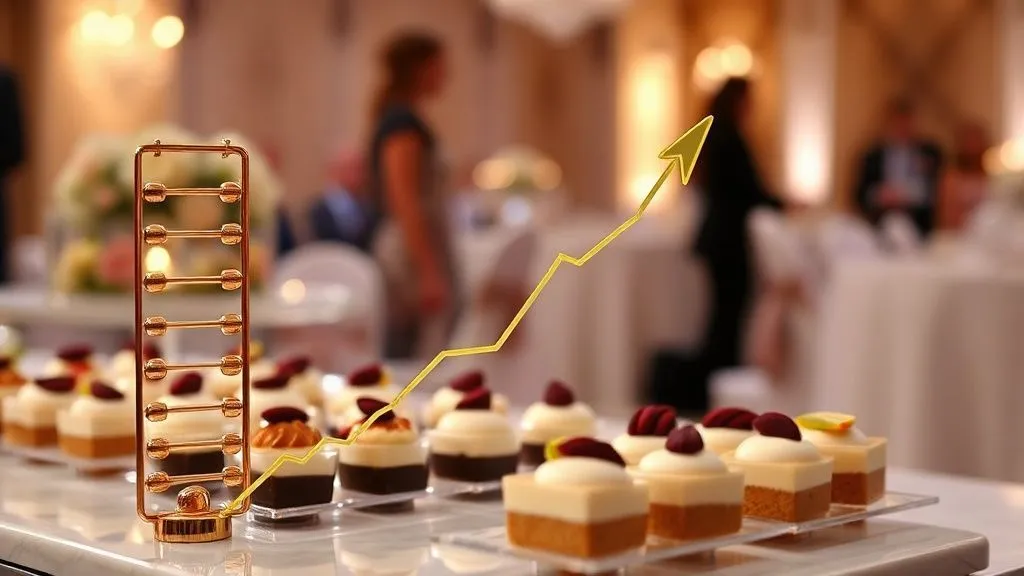
How to Accurately Price Wedding Mini Dessert Bars for Profit?
For over 15 years in the bustling world of wedding cakes and bespoke dessert experiences, I've witnessed countless passionate bakers and entrepreneurs pour their heart and soul into creating magnificent mini dessert bars. Yet, time and again, I see the same disheartening scenario: incredible talent goes unrewarded, businesses barely break even, and dreams slowly fade, all because of a fundamental misunderstanding of pricing.
The allure of a mini dessert bar is undeniable – variety, personalization, and a delightful visual feast. But beneath the layers of ganache and delicate piping lies a complex financial puzzle. Many bakers underestimate their true costs, fall into the trap of undercutting competitors, or simply guess at a price, leaving significant profit on the table and risking the very sustainability of their business. It's a common, yet entirely avoidable, pitfall.
This comprehensive guide isn't just about crunching numbers; it's about empowering you with a robust framework. We'll dive deep into the essential components of accurate pricing, from granular ingredient costs and hidden overheads to strategic market positioning and value-based selling. By the end, you'll possess the tools and confidence to not only price your wedding mini dessert bars for profit but also to truly understand and articulate the immense value you bring to every celebration.
1. The Foundation: Mastering Your True Cost of Goods Sold (COGS)
Before you can even think about profit, you must intimately understand what it costs you to create each and every mini dessert. This goes beyond just the flour and sugar. I've found that many initial pricing errors stem from an incomplete understanding of COGS.
Breaking Down Ingredient Costs
This is where precision is paramount. You need to account for every single ingredient, right down to the pinch of salt. Don't just estimate; weigh, measure, and track. For instance, if you're making 100 mini cheesecakes, calculate the exact amount of cream cheese, graham crackers, butter, sugar, and toppings per cheesecake, then multiply. Remember to factor in a buffer for waste or mistakes.
- Direct Ingredients: Flour, sugar, butter, eggs, chocolate, fruit, extracts, etc.
- Specialty Items: Edible glitter, custom toppers, unique flavorings.
- Garnish & Decoration: Fresh berries, mint leaves, gold leaf, edible flowers.
It’s not enough to buy in bulk; you need to know the cost *per unit* of each ingredient. A large bag of flour might seem cheap, but what does 100g of that flour cost you? This granular detail is crucial for accurate COGS.
Packaging & Presentation: The Unseen Costs
Your mini desserts don't just magically appear on the bar. They require careful packaging, transport, and often, specialized display items. These are direct costs tied to the product's delivery and presentation.
- Individual Packaging: Mini cupcake liners, dessert cups, small boxes, labels.
- Transport Packaging: Sturdy boxes, anti-slip mats, thermal bags/coolers.
- Display Elements: Risers, platters, tongs, serving spoons (if you provide them and they are disposable or included in the cost).
- Consumables for Display: Doilies, custom signage, small decorative elements.
Many overlook these 'small' costs, but they add up significantly. Imagine providing 150 mini desserts; that's 150 individual cups, spoons, or wrappers. These are not insignificant.
| Item | Flour | Sugar | Cream Cheese | Butter | Graham Cracker | Packaging Cup | Total Ingredient COGS |
|---|---|---|---|---|---|---|---|
| Mini Cheesecake (per unit) | $0.02 | $0.03 | $0.15 | $0.05 | $0.04 | $0.10 | $0.39 |
| Mini Eclair (per unit) | $0.08 | $0.12 | $0.07 | $0.12 | $0.39 | ||
| Macaron (per unit) | $0.10 | $0.05 | $0.08 | $0.15 | $0.38 |
2. Beyond Ingredients: Labor Costs & Operational Overheads
Your time and the operational costs of your business are just as valuable as your ingredients. Neglecting these areas is a surefire way to erode profitability. I've often seen bakers price based on ingredient costs alone, essentially paying themselves nothing for their skilled labor.
Calculating Direct Labor
This includes the time spent directly on fulfilling an order. Be meticulous. Track everything from initial consultation and recipe development to baking, decorating, packaging, and even loading for delivery.
- Consultation & Planning: Time spent discussing with clients, finalizing menus.
- Procurement: Time spent shopping for ingredients, receiving deliveries.
- Preparation & Baking: Hands-on time in the kitchen for mixing, baking, cooling.
- Decoration & Assembly: The intricate work of piping, garnishing, arranging.
- Packaging: Carefully boxing and preparing items for transport.
- Delivery & Setup: Travel time, fuel, and the time spent arranging the bar at the venue.
Assign an hourly rate to yourself and any staff involved. This rate should reflect your skill level and market value, not just minimum wage. If you pay yourself $25/hour, and an order takes 10 hours of direct labor, that's $250 that *must* be covered.
Allocating Indirect Labor & Overheads
These are the costs of doing business, regardless of a specific order. They need to be distributed across all your products and services. Think about your monthly fixed costs, then determine how to allocate a portion to each project.
- Rent/Mortgage: For your kitchen, studio, or office space.
- Utilities: Electricity, gas, water for baking and storage.
- Equipment Maintenance & Depreciation: Ovens, mixers, refrigerators have a lifespan and maintenance needs.
- Insurance: Liability insurance, business insurance.
- Marketing & Website: Costs for advertising, social media, website hosting, photography.
- Administrative: Bookkeeping, software subscriptions, phone, internet.
- Licensing & Permits: Annual fees for food safety, business licenses.
To allocate overheads, sum up your total monthly overhead, then divide it by the number of projects or revenue-generating hours you anticipate in a month. This gives you an overhead cost per project/hour to add to your pricing. According to a Harvard Business Review article on small business pricing, underestimating overhead is a primary reason for financial struggle.
Case Study: Sweet Success Bakery's Overhead Revelation
Sweet Success Bakery, a budding mini dessert bar specialist, initially priced their bars based on ingredients and direct labor, assuming their rent and utility costs were 'just part of doing business'. Their monthly overhead was $1500 (rent, utilities, insurance, website). They typically handled 5 wedding dessert bars a month. By dividing $1500 by 5, they realized each bar needed to cover an additional $300 in overhead. Incorporating this into their pricing transformed their thin margins into sustainable profits, allowing them to invest in new equipment and grow their team.

3. Market Research & Competitor Analysis: Knowing Your Worth
You can't price in a vacuum. Understanding the market and what your competitors are offering and charging is crucial for positioning your business effectively. This isn't about blindly copying; it's about intelligent strategic placement.
Who Are Your Competitors?
Identify both direct and indirect competitors. Direct competitors are other bakers or caterers offering similar mini dessert bars. Indirect competitors might be venues that offer their own dessert options, or even traditional wedding cake bakers who occasionally do dessert tables. Look at their online presence, reviews, and portfolio.
- Local Bakeries: Specializing in custom desserts.
- Catering Companies: Offering full-service event catering, including desserts.
- Home-Based Bakers: Often have lower overheads, but might lack certain certifications or scale.
What Are They Charging?
This requires a bit of detective work. Look for pricing guides on their websites (though many keep this private), or inquire as a 'mystery shopper' for a general quote. Pay attention to what's included in their packages: delivery, setup, display items, number of dessert types, portion sizes. Are they charging per person, per dessert, or a flat fee?
"The goal of competitive analysis is not to be the cheapest, but to understand your position in the market and justify your value." - My personal mantra.
Use this information to identify gaps in the market, discover what clients are willing to pay, and understand where your unique selling propositions (USPs) can command a premium. If your quality, presentation, or unique flavor profiles are superior, don't be afraid to price accordingly.
4. Crafting Your Pricing Model: From Cost-Plus to Value-Based
Once you know your costs and understand the market, you can choose a pricing strategy. I advocate for a blend, eventually moving towards a more value-based approach as your brand strengthens.
The Cost-Plus Method: A Starting Point
This is the most straightforward method, especially for new businesses. You calculate your total costs (COGS + Labor + Overhead per project) and then add a desired profit margin. For example, if a dessert bar costs you $500 to produce, and you want a 30% profit margin, you'd price it at $500 / (1 - 0.30) = $714.28. This ensures all your costs are covered and you're making a predetermined profit.
Total Cost = COGS + Direct Labor + Allocated Overhead
Selling Price = Total Cost / (1 - Desired Profit Margin)
While simple, this method doesn't always account for market demand or the perceived value of your product.
Value-Based Pricing: Selling the Experience
This is where true profitability lies in the wedding industry. Value-based pricing focuses on what the client perceives your service is worth, rather than just your internal costs. A couple isn't just buying mini desserts; they're buying peace of mind, a stunning aesthetic, unique flavors, and an unforgettable experience for their guests.
To implement value-based pricing, consider:
- Your Brand Reputation: Are you known for luxury, unique flavors, exceptional service?
- Customization & Exclusivity: How bespoke is your offering?
- Expertise & Experience: Your years in the industry, awards, glowing testimonials.
- Convenience: Do you handle everything from design to setup and tear-down?
As marketing guru Seth Godin often emphasizes, "People don't buy what you do; they buy why you do it." Your 'why' – the exceptional experience and flawless execution – is where you can command premium prices.
- Step 1: Calculate Your Absolute Minimum Price: This is your total cost (COGS + Labor + Overhead) with a very modest profit margin. This is your 'walk-away' price.
- Step 2: Research Market Range: Understand the high and low ends of what competitors charge for similar quality/service.
- Step 3: Identify Your Unique Value: List everything that makes your offering superior or different.
- Step 4: Set Your Desired Price: Position yourself within the market range based on your unique value, aiming higher if your USPs are strong.
- Step 5: Articulate Your Value: Clearly communicate to clients *why* your price is justified, focusing on benefits and outcomes.
5. The Art of the Quote: Customization, Portions, and Upsells
Presenting your pricing effectively is an art form. It needs to be clear, comprehensive, and reflect the value you've meticulously calculated. This is where you transform numbers into a compelling proposal.
Determining Optimal Portions
How many mini desserts per person? This is a common question. A good rule of thumb for a full dessert bar (where there might also be a small cutting cake) is 2-3 mini desserts per guest. If the mini dessert bar is the *only* dessert, I recommend 3-4 per guest to ensure ample variety and quantity. Always discuss this with the client and factor in the overall catering plan.
- 2-3 per person: When a traditional wedding cake is also served, or other substantial desserts.
- 3-4 per person: When the mini dessert bar is the primary or sole dessert offering.
- Variety: Offer 3-5 different types for a visually appealing and satisfying experience.
Building Custom Packages
Offer tiered packages or a base price with clear add-ons. This gives clients flexibility and allows you to upsell.
- Base Package: Includes a certain number of dessert types, standard portioning, basic display items, delivery within a specific radius.
- Premium Package: More dessert types, higher-end ingredients, custom flavor development, elaborate display rentals, extended delivery/setup.
- A La Carte Add-ons: Specialty dietary options (gluten-free, vegan), personalized signage, floral arrangements, custom dessert stands, late-night setup/tear-down.
Be transparent about what's included and what's extra. A detailed quote builds trust and avoids surprises.
6. Profit Margins: Setting Your Financial Goals
Understanding your profit margin isn't just about covering costs; it's about the health and growth of your business. This is the percentage of revenue that becomes profit after all expenses are accounted for.
Industry Benchmarks vs. Your Reality
While industry benchmarks can offer a general guideline (e.g., many catering businesses aim for 10-20% net profit margin), your specific business model, location, and desired lifestyle will dictate your ideal margin. For custom, high-end wedding services, you should aim for a healthier margin than a mass-produced product. I generally advise clients to target a gross profit margin (revenue minus COGS) of at least 60-70% for custom baked goods, which then allows room to cover labor and overheads and still yield a healthy net profit.
Don't be afraid to aim high if your product and service justify it. Remember, clients are paying for your expertise, creativity, and the seamless execution of a once-in-a-lifetime event. For a deeper dive into understanding different types of profit margins, Investopedia offers a comprehensive explanation.
The Importance of a Buffer
Always include a buffer in your pricing. Unexpected costs can arise: a last-minute ingredient price hike, a broken display stand, longer-than-expected setup time due to venue issues. A small percentage (e.g., 5-10%) added as a buffer can save you from eating into your profits when the inevitable happens. This isn't about overcharging; it's about prudent financial planning.
"A true professional prices for the knowns and builds in a buffer for the unknowns. That's the difference between surviving and thriving." - A lesson learned from years of experience.
7. Legal & Logistical Considerations: Contracts & Delivery
While not directly a pricing component, these elements significantly impact your cost and perceived value, and thus, your pricing strategy. Overlooking them can lead to unexpected expenses or disputes.
Clear Contracts Protect Everyone
A detailed contract outlining everything from menu items and portion sizes to delivery times, setup requirements, payment schedules, and cancellation policies is non-negotiable. This protects both you and your client. Any changes outside the contract should incur additional fees, which should also be stipulated.
Delivery, Setup, and Tear-Down Fees
These are often overlooked or underestimated. Calculate travel time (round trip), fuel costs, vehicle maintenance, and the labor required for setup and, if applicable, tear-down. Some businesses charge a flat fee, others charge per mile, or a percentage of the total order. Be explicit about these charges in your quote. For instance, a 50-mile round trip might take 2 hours of driving, plus 1 hour for setup. At $25/hour, that's $75 in labor alone, not including fuel or vehicle wear. This is a critical component of accurately pricing wedding mini dessert bars for profit.
For more insights on business contracts, consider resources like the U.S. Small Business Administration's legal guidance.
8. Continuous Review & Adjustment
The market isn't static, and neither are your costs. Regular review of your pricing strategy is essential for sustained profitability. I recommend doing a full cost analysis at least once a year, and a market review every six months.
- Monitor Ingredient Costs: Prices fluctuate. Keep an eye on your suppliers.
- Track Your Time: Are your labor estimates still accurate? Are you becoming more efficient?
- Gather Client Feedback: Are clients consistently saying you're too expensive or surprisingly affordable? This offers insights into perceived value.
- Observe Competitors: Are new players entering the market? Are existing ones changing their pricing?
- Review Your Profit & Loss Statements: Are you actually hitting your desired profit margins? If not, where are the leaks?
Don't be afraid to adjust your prices. Raising prices, when justified by your value and market conditions, is a sign of a healthy, confident business. Conversely, if you find you're consistently outpricing the market without a clear value proposition, you might need to re-evaluate your offerings or target demographic.
Frequently Asked Questions (FAQ)
Q: Should I offer discounts for larger orders or multiple services? A: While enticing, be cautious with discounts. If you do, ensure they are strategic and minimal. A better approach is to offer added value for larger orders, such as complimentary delivery or an extra dessert type, rather than directly reducing your carefully calculated price. If offering multiple services (e.g., a wedding cake AND a dessert bar), a small package discount can be justifiable if it significantly streamlines your workflow and guarantees a larger booking. Always ensure your profit margin is protected.
Q: How do I handle clients who only care about the lowest price? A: Not every client is your ideal client. Those solely focused on the lowest price may not appreciate the quality, effort, and expertise that goes into your mini dessert bars. Politely explain your value proposition and the quality of your ingredients and service. If they still push for a lower price that compromises your profitability, it's often better to politely decline, allowing you to focus on clients who truly value your work.
Q: What if my prices seem higher than local competitors after my calculations? A: This is not necessarily a bad thing! If your calculations are accurate and you've accounted for all your costs and desired profit, it means your competitors might be underpricing, or you offer a superior product/service. Focus on articulating your unique value proposition, showcasing your quality, ingredients, design, and exceptional service. Use your portfolio and testimonials to justify your premium pricing.
Q: How often should I update my pricing? A: I recommend a comprehensive review of your COGS and overheads at least annually, or whenever there are significant increases in ingredient costs or operational expenses. A quick market scan can be done every 6 months. Be proactive; don't wait until your profit margins are suffering before making adjustments.
Q: Should I charge a separate setup fee, or include it in the per-person price? A: For transparency and clarity, I highly recommend charging a separate setup and delivery fee. This allows clients to see exactly what they are paying for logistical services. Including it in the per-person price can make your base dessert cost seem higher and less competitive, and it might not accurately reflect the variable nature of delivery/setup based on venue distance or complexity.
Key Takeaways and Final Thoughts
Mastering the art of pricing wedding mini dessert bars for profit is not a dark art; it's a science built on meticulous calculation, strategic market understanding, and a confident articulation of your value. Remember these core principles:
- Know Your Costs Inside Out: Every ingredient, every minute of labor, every overhead dollar must be accounted for.
- Research Your Market: Understand what competitors offer and what clients are willing to pay, but don't let it dictate your worth.
- Embrace Value-Based Pricing: Sell the experience, the peace of mind, and the unforgettable memories, not just sugar and flour.
- Be Transparent & Detailed: Clear quotes and contracts build trust and prevent misunderstandings.
- Prioritize Profitability: Your business needs to be sustainable to thrive and continue bringing joy to countless weddings.
- Review & Adapt: The business landscape changes; your pricing strategy should evolve with it.
By diligently applying these principles, you'll move beyond guessing and hoping, transforming your passion into a truly profitable and sustainable venture. Your exquisite mini dessert bars deserve to be priced accurately, reflecting the incredible skill, dedication, and joy you pour into every single creation. Go forth, price with confidence, and let your business flourish!
Recommended Reading
- Chaos to Calm: 5 Steps for Bridal Shower Gift Opening with 50+ Guests?
- 5 Steps to Flawless Calligraphy on 200+ Wedding Envelopes (No Burnout!)
- Couture Gown Delays? 7 Strategies to Guarantee Your Bridal Shipment!
- Pricing Complex Wedding Stationery: 7 Steps to Maximize Profit
- 8 Smart Strategies: How to Avoid Unexpected Fees on a Luxury Cruise Honeymoon?





Comments
Leave a comment below. Your email will not be published. Required fields marked with *