


How to resolve client disputes over custom wedding band designs?
For over 15 years in the bespoke jewelry industry, I've witnessed firsthand the incredible joy a perfectly crafted custom wedding band brings. But I've also seen the immense stress and frustration that arise when a client's vision doesn't align with the final product, leading to disheartening disputes.
The creation of a custom wedding band is an deeply personal journey, fraught with emotional investment and often, significant financial outlay. When expectations diverge from reality, what should be a celebration of love can quickly devolve into a challenging conflict, damaging relationships and reputations.
In this definitive guide, I'll share my proven frameworks and expert insights on how to resolve client disputes over custom wedding band designs, offering actionable steps to prevent misunderstandings, de-escalate tension, and negotiate solutions that leave both you and your clients feeling respected and satisfied.
Understanding the Roots of Custom Design Disputes
Before we can resolve disputes, we must understand why they happen. Custom wedding band design disputes often stem from a complex interplay of factors, not just a single misstep. In my experience, the core issues usually revolve around communication breakdowns, evolving client expectations, and sometimes, the inherent technical challenges of translating a concept into a tangible piece.
Think of it like building a dream home without a truly comprehensive blueprint. Every detail, from the curve of a band to the setting of a diamond, is subject to interpretation. Clients might struggle to articulate their desires precisely, or their vision might subtly shift during the design process, leading to a disconnect with the designer's interpretation. This emotional investment in a 'forever' piece amplifies any perceived discrepancies.
Proactive Prevention: Laying the Groundwork for Dispute-Free Designs
The best way to resolve a dispute is to prevent it from happening in the first place. My philosophy has always been to invest heavily in the foundational stages of the design process. This proactive approach not only minimizes the likelihood of conflict but also builds a stronger, more trusting relationship with your clients from day one.
The Power of a Clear Design Brief and Contract
A comprehensive design brief and a robust contract are your first lines of defense. I've seen countless issues avoided simply by having these documents meticulously detailed and clearly understood by all parties. It's not about being rigid; it's about establishing clarity.
- Detailed Design Brief: This document should capture every aspect of the client's vision, including desired materials, stone types, dimensions, finishes, and any specific design elements. Use open-ended questions to encourage detailed responses.
- Visual References: Encourage clients to provide inspiration images, even if they're not jewelry-related. This helps you understand their aesthetic preferences beyond just words.
- Revision Policy: Clearly state the number of design revisions included in the initial fee and the cost of additional revisions. This manages expectations regarding changes.
- Approval Stages: Outline distinct approval stages (e.g., CAD approval, wax model approval) and the implications of approving each stage.
- Payment Schedule: Detail deposit requirements, milestone payments, and final payment terms.
- Dispute Resolution Clause: Include a clause outlining the agreed-upon process for resolving disagreements, such as mediation or arbitration.
"A well-crafted contract isn't just a legal document; it's a blueprint for a successful partnership, fostering transparency and mutual understanding." I often tell new jewelers, don't view it as a burden, view it as protection for both you and your client. For further insights on robust contract practices, consider resources from legal experts in creative industries, like those found on Harvard Business Review on negotiation and contracts.
Visualizing the Dream: Tools and Techniques
Words alone are often insufficient to convey the intricate details of a custom piece. Leveraging advanced visualization tools is paramount to ensuring the client's mental image aligns with your design. This is where technology truly shines in preventing disputes.
- Initial Sketches: Start with hand-drawn sketches to quickly capture ideas and get initial feedback. These are flexible and easy to modify.
- Computer-Aided Design (CAD): Once a direction is established, create detailed 3D CAD renderings. These offer photorealistic views from all angles, allowing clients to virtually 'see' their ring.
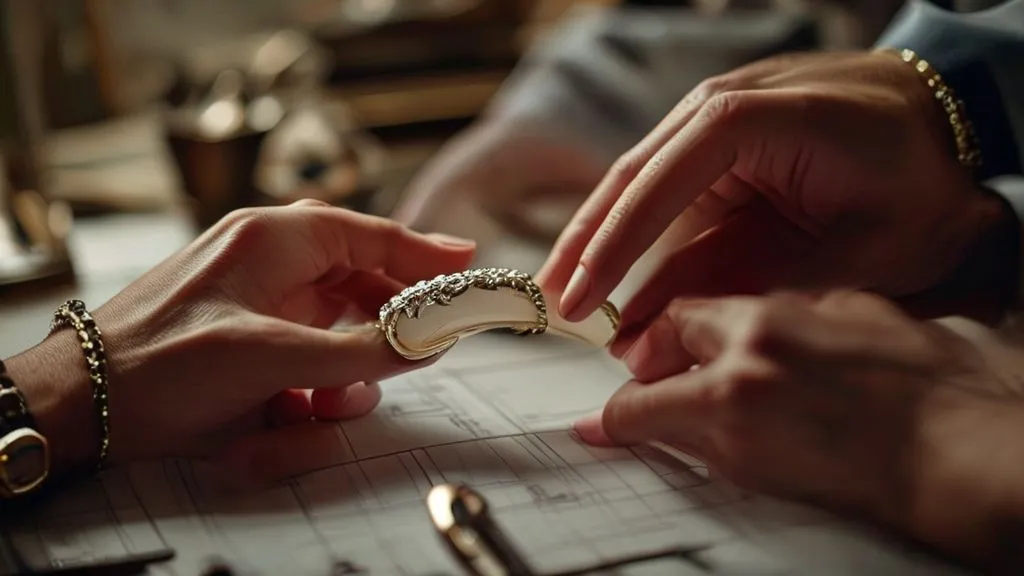
- Wax Models/3D Prints: For even greater tactile understanding, produce a physical wax model or 3D print. Clients can try it on, feel the dimensions, and visualize it on their hand. This often uncovers hidden concerns.
- Material Samples: Provide samples of different metals, finishes, and even stone simulants to help clients make informed decisions about texture and color.
Providing these visual aids dramatically reduces the chances of a client saying, "It's not what I imagined." The more concrete the visualization, the less room for misinterpretation.

The Art of Early Detection: Spotting Red Flags
Even with the best preventative measures, sometimes subtle signs emerge that indicate potential dissatisfaction. As an experienced specialist, I've learned to recognize these 'red flags' early, allowing for intervention before a full-blown dispute erupts. Pay close attention to:
- Excessive Hesitation: If a client is unusually quiet or takes an excessively long time to approve a design stage without clear feedback, it might indicate underlying doubts.
- Vague Feedback: Comments like "I just don't love it" without specific reasons are a sign that the client can't articulate their concern, which you need to help them uncover.
- Bringing in Multiple Opinions: While natural, if a client consistently consults numerous friends or family members who weren't part of the initial brief, it can dilute the original vision and introduce conflicting ideas.
- Frequent, Minor Changes: A client constantly requesting small, almost imperceptible tweaks might be struggling with indecision or an unarticulated core dissatisfaction.
- Sudden Silence: A client who suddenly stops responding or becomes difficult to reach after a design presentation might be avoiding expressing their unhappiness.
When you spot these red flags, it's crucial to gently probe. Ask open-ended questions like, "What specific elements are you still feeling uncertain about?" or "Is there anything that feels different from what you originally envisioned?"
De-escalation Strategies: When a Dispute Arises
Despite your best efforts, a dispute may still arise. When it does, your immediate response is critical. The goal is to de-escalate the situation, validate the client's feelings, and create a pathway towards resolution, rather than further confrontation.
Active Listening and Empathy: The First Response
When a client expresses dissatisfaction, the most powerful tool you have is active listening. They want to be heard, understood, and validated. Resist the urge to immediately defend your work or explain away the problem.
- Listen Without Interruption: Let the client express their full concerns without cutting them off. Take notes.
- Acknowledge and Validate: Use phrases like, "I hear you saying that..." or "I understand why you're feeling frustrated about..." This doesn't mean you agree with their assessment, but you acknowledge their experience.
- Show Empathy: Express genuine concern. "I can only imagine how disappointing this must be when you had such a clear vision for your wedding band."
- Ask Clarifying Questions: Once they've finished, ask specific, non-judgmental questions to ensure you fully grasp the issue. "Could you point out exactly what aspects of the curve don't meet your expectation?"
"In the heat of a dispute, empathy is not a weakness; it's the strongest bridge to understanding and resolution." As noted by experts in conflict resolution, such as those published in Harvard Business Review, empathetic listening can transform a confrontational dynamic into a collaborative problem-solving session.
Structured Communication: Setting Boundaries and Expectations
Once you've actively listened, it's time to transition to a more structured conversation. This helps to move from emotional expression to practical problem-solving. Maintain a calm, professional demeanor.
- Reiterate the Problem: Summarize the client's concerns in your own words to confirm understanding. "So, if I understand correctly, the main issue is the thickness of the band and the way the diamonds are set, correct?"
- Review the Original Brief/Approvals: Gently refer back to the agreed-upon design brief, CAD approvals, or wax model approvals. "Looking at the signed CAD approval from [Date], we had confirmed the band thickness at X mm. Could you help me understand where the discrepancy lies?"
- Propose a Dedicated Meeting: If the issue is complex, suggest a dedicated meeting (in-person or video call) to discuss solutions, rather than trying to resolve it via email.
- Set Clear Next Steps: End the conversation with defined actions, who is responsible for them, and a timeline. This brings order to the situation.
Negotiating Solutions: Finding Common Ground
With a clear understanding of the problem and a de-escalated client, the next phase is to negotiate a solution. This often involves compromise and creative problem-solving. Remember, your goal is a mutually agreeable outcome that preserves your reputation and the client relationship.
Offer Defined Revision Rounds
If the issue is design-related, offer a specific number of additional revision rounds, clearly outlining what these will entail and any associated costs (referencing your contract). This prevents an endless loop of changes.
- Targeted Revisions: Focus only on the specific areas of concern identified.
- Time-Bound: Set a clear deadline for the client to provide feedback on the revisions.
- Cost Transparency: If the revisions fall outside the contracted scope, clearly explain the additional charges before proceeding.
Consider Compromise and Alternatives
Sometimes, a perfect resolution isn't possible, and compromise is necessary. Be open to exploring alternatives that can still satisfy the client without completely redoing the piece or incurring excessive costs.
- Minor Alterations: Can a small adjustment (e.g., a different polish, a slight reshaping of an edge) address the core concern without a major overhaul?
- Material Changes: If the issue is with the feel or perceived quality, could a different alloy or finish make a difference?
- Partial Refund/Credit: In rare cases, if the piece truly cannot be salvaged to the client's satisfaction and it's a genuine misunderstanding, a partial refund or credit towards a future purchase might be appropriate. This should be a last resort.
- Remake (with conditions): If a complete remake is the only option, clearly outline the cost split. For example, the client might pay for materials, and you cover labor, or vice-versa, depending on fault.
The key here is transparency and collaboration. Present the options clearly, explain the implications of each, and work with the client to choose the best path forward.
| Resolution Option | Cost Implication | Timeframe | Client Satisfaction Impact | When to Use |
|---|---|---|---|---|
| Minor Design Adjustment | Low (Labor only) | 1-3 days | Medium-High | Small aesthetic issues, finish changes |
| Partial Remake/Component Replacement | Medium (Materials + Labor) | 1-2 weeks | Medium | Specific part faulty, stone re-setting |
| Full Remake (Cost Split) | High (Shared materials/labor) | 3-4 weeks | High | Major design flaw, irreconcilable differences |
| Partial Refund/Credit | Variable (Financial loss) | Immediate | Medium-High | Unsalvageable piece, goodwill gesture |

Case Study: Turning a Tense Situation into a Triumph
Case Study: The 'Too Chunky' Band
I once had a client, Sarah, who was distraught. Her custom wedding band, designed with an intricate pavé diamond setting, felt "too chunky" when she tried it on, despite approving the CAD and wax model. She was on the verge of tears, feeling it didn't match her delicate engagement ring.
My first step was active listening. I let her vent, acknowledging her disappointment. Then, I gently referred back to the approved wax model, which had the exact dimensions. It became clear that while the dimensions were correct, her *perception* of 'delicate' had evolved once she saw it on her hand, next to her engagement ring, which was thinner than she remembered.
Instead of arguing, I proposed a compromise: we couldn't reduce the existing band's thickness without compromising the pavé setting, but we could offer to slightly thin the *edges* and apply a high-polish finish to enhance its visual lightness, at a reduced cost for the extra labor. I also showed her a physical example of a similar band with thinned edges to manage expectations.
Sarah agreed. The small adjustment made a significant visual difference, and the high polish added to the delicate feel she desired. She left thrilled, not only with her ring but also with the understanding and flexibility shown. This experience transformed a potential negative review into a glowing testimonial, demonstrating that how to resolve client disputes over custom wedding band designs can actually *strengthen* client relationships.
When All Else Fails: Formal Resolution Paths
While rare, there are instances where direct negotiation fails to resolve the dispute. In such cases, it's important to know your options for formal resolution, always keeping in mind the potential impact on your reputation and resources.
- Mediation: A neutral third party facilitates communication and helps both sides reach a mutually acceptable agreement. Mediators don't make decisions but guide the process. This is often less adversarial and more cost-effective than litigation.
- Arbitration: A neutral third party (an arbitrator) hears both sides of the argument and makes a binding decision. This is a more formal process than mediation but generally faster and less expensive than court.
- Small Claims Court: For disputes involving smaller monetary amounts, small claims court can be an option. However, it's time-consuming and can be emotionally draining.
- Legal Counsel: If the dispute involves significant sums, complex legal issues, or a breach of contract, consulting with a lawyer specializing in business or contract law is advisable.
Always review your contract's dispute resolution clause. It typically outlines the agreed-upon method if direct negotiation fails. Engaging in alternative dispute resolution (ADR) methods like mediation or arbitration is often preferred, as it maintains a level of privacy and can be less damaging to professional relationships than public litigation. For more on ADR, consult resources like the American Arbitration Association.
Building Trust and Reputation Through Conflict Resolution
How you resolve client disputes over custom wedding band designs isn't just about salvaging a single transaction; it's about safeguarding and enhancing your long-term reputation. In the close-knit world of bespoke jewelry, word-of-mouth is incredibly powerful. A client who feels heard and respected, even when a problem arises, is far more likely to recommend you than one who feels dismissed.
Every dispute presents an opportunity to demonstrate your professionalism, integrity, and commitment to client satisfaction. Successfully navigating a challenging situation can transform a potentially negative experience into a powerful testament to your customer service excellence. It builds deep trust and shows that you stand behind your work, even when things get difficult.
"Your reputation isn't built on flawless execution alone, but on how gracefully and effectively you recover when things inevitably go wrong." This principle, often highlighted in customer experience literature, holds particularly true for custom, high-value items like wedding bands. Exceptional conflict resolution practices contribute significantly to brand loyalty and positive public perception. You can find more on this topic from customer experience thought leaders like Shep Hyken, often featured on Forbes.

Frequently Asked Questions (FAQ)
How do I handle a client who keeps changing their mind throughout the design process? This is a common challenge. The best approach is proactive. Ensure your contract clearly outlines a limited number of revision rounds included in the initial fee. After those are exhausted, any further changes should incur an additional charge, which you communicate transparently. Gently remind the client of the agreed-upon design brief and encourage them to finalize their decisions before proceeding to the next stage (e.g., from CAD to wax model). Sometimes, showing them the financial and time implications of continuous changes can help them solidify their choices.
What if a client refuses to pay for extra revisions after approving a design? This becomes a contractual issue. If your contract clearly states the terms for additional revisions and the client approved the original design, you have a strong position. Politely remind them of the signed agreement. If they still refuse, you may need to withhold the final product until payment is made or explore formal dispute resolution methods as outlined in your contract. Document all communication and approvals diligently.
Should I offer a refund for a custom piece if the client is truly unhappy? Offering a full refund for a custom piece is generally not advisable, as it's a unique item tailored to specific preferences and often has no resale value for you. However, a partial refund or credit towards a different solution might be considered as a gesture of goodwill, especially if there was a genuine misunderstanding that wasn't solely the client's fault. This should be a last resort after exploring all other design adjustments or compromises. Always consider the cost of materials and labor already expended.
When is it appropriate to walk away from a client or project? While rare, there are situations where a client relationship becomes untenable. If a client is abusive, makes unreasonable demands beyond the scope of the contract, refuses to pay for agreed-upon work, or if their requests compromise your artistic integrity or technical capabilities, it might be time to respectfully terminate the project. Ensure your contract includes a termination clause. It's crucial to consult legal counsel if you're considering this step to ensure you do so ethically and legally.
How do contracts protect both the jeweler and the client in custom design? A well-drafted contract acts as a clear roadmap and a safety net for both parties. For the jeweler, it defines the scope of work, payment terms, revision policies, and dispute resolution, protecting your time, effort, and finances. For the client, it ensures they understand what they are purchasing, the process involved, and their rights regarding revisions and quality. It minimizes misunderstandings by formalizing expectations, creating a transparent and accountable process for both sides.
Key Takeaways and Final Thoughts
- Prevention is Paramount: Invest in detailed design briefs, clear contracts, and comprehensive visualization tools to minimize disputes from the outset.
- Listen Actively: When disputes arise, prioritize empathetic listening to understand the client's perspective before offering solutions.
- Communicate with Clarity: Always refer back to agreed-upon terms, provide structured feedback, and set clear expectations for next steps.
- Be Open to Compromise: Explore creative solutions and alternatives that can satisfy the client without undue burden on your business.
- Document Everything: Maintain meticulous records of all communications, approvals, and design changes.
- Protect Your Reputation: How you resolve conflict speaks volumes about your brand and can be a powerful driver of trust and referrals.
Mastering the art of how to resolve client disputes over custom wedding band designs is not just about damage control; it's about elevating your craftsmanship to true artistry, understanding that the human element is as crucial as the metallurgy. By approaching every interaction with professionalism, empathy, and a clear process, you can transform potential conflicts into opportunities to build stronger relationships, earn unwavering trust, and ensure that every custom wedding band you create becomes a cherished symbol of love, free from discord.
Recommended Reading
- 7 Smart Ways to Plan Bridal Shower Games for a Game-Averse Bride
- Day-Of Seating Chart Chaos? 5 Urgent Fixes for Wedding Revisions
- 7 Ways to Boost Profit on Custom Wedding Favors Without Price Hikes
- 7 Proactive Steps to Prevent Engagement Ring Theft at Crowded Parties
- Groom Cuff Links: Which Metal Reigns Supreme on Your Big Day?



Comments
Leave a comment below. Your email will not be published. Required fields marked with *