


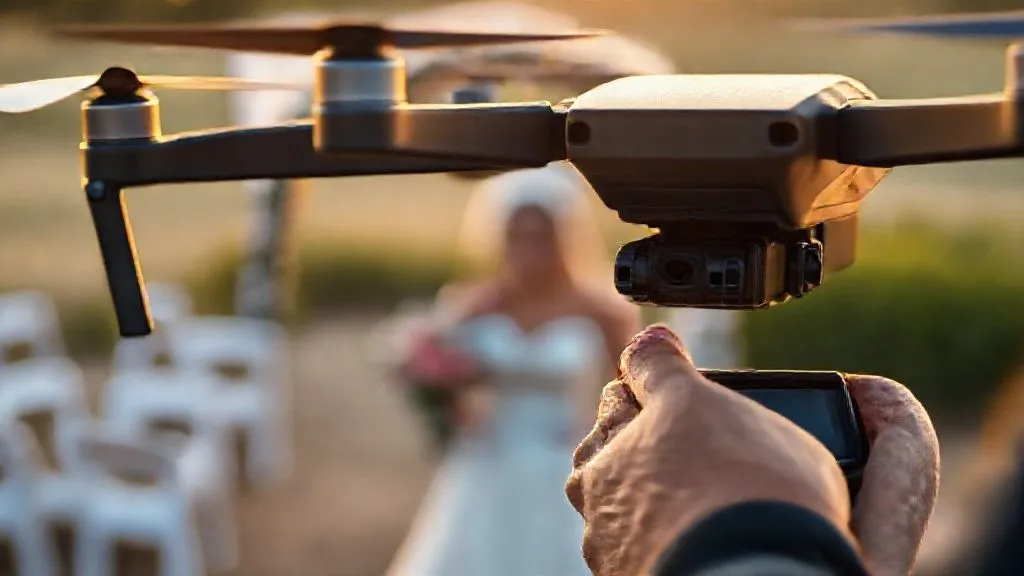
Preventing Drone Signal Loss During a Wedding Ceremony?
For over 15 years, capturing the ephemeral magic of weddings through a lens has been my passion. And in the last decade, the drone has become an indispensable tool, offering breathtaking perspectives that were once unimaginable. But I've witnessed firsthand the sheer panic and disappointment when a drone, mid-flight, suddenly loses its connection, plummeting client dreams (and expensive equipment) to the ground. It's a stomach-dropping moment no wedding photographer wants to experience.
The stakes are incredibly high. A wedding ceremony is a one-time event; there are no retakes for that iconic aerial shot of the couple exchanging vows or the grand exit. Signal loss doesn't just mean a missed shot; it can mean a crashed drone, potential injury, and, most importantly, irreparable damage to your professional reputation and client trust. The unpredictable nature of RF interference, physical barriers, and even environmental factors makes 'Preventing drone signal loss during a wedding ceremony?' a critical challenge for every aerial wedding photographer.
This isn't a problem without a solution. Through years of trial, error, and meticulous planning, I've developed a robust framework to mitigate these risks significantly. In this definitive guide, I’ll share my battle-tested strategies, actionable steps, real-world insights, and even a mini case study to ensure your drone operations are as smooth and reliable as the wedding itself. You’ll learn how to identify threats, optimize your gear, master in-flight protocols, and build redundancy into every aspect of your aerial workflow.
Understanding the Enemy: What Causes Drone Signal Loss?
Before we can effectively combat drone signal loss, we must first understand its root causes. Think of your drone's signal as an invisible lifeline, constantly susceptible to a myriad of external and internal pressures. Recognizing these vulnerabilities is the first step towards robust prevention.
Electromagnetic Interference (EMI) Explained
One of the most insidious enemies of a stable drone connection is electromagnetic interference (EMI). This invisible force can wreak havoc on your drone's radio frequency (RF) link. Common culprits at wedding venues include powerful Wi-Fi networks (especially those operating on the congested 2.4GHz band), cellular towers, high-voltage power lines, large public address systems, and even other drones or electronic devices operating nearby. These sources can flood the airwaves, effectively jamming your drone's communication channel. According to a review of wireless communication challenges by IEEE, interference is a primary concern in dense RF environments.
Physical Obstructions and Line of Sight
Another major factor is simply what's between your controller and your drone. Buildings, dense tree lines, hills, large vehicles, and even a dense crowd of wedding guests can act as physical barriers, absorbing or reflecting your drone's signal. Maintaining a clear Visual Line of Sight (VLOS) is not just a regulatory requirement in many regions; it's a fundamental principle for signal integrity. Any obstruction, even seemingly minor ones, can degrade signal quality significantly.
Your drone's signal is like a beam of light – if you can't see it, neither can your controller. Maintaining clear line of sight is non-negotiable for stable flight.
Distance and Environmental Factors
The further your drone flies from your controller, the weaker the signal becomes. Every drone has a maximum effective range, which is often significantly reduced in real-world conditions compared to manufacturer specifications. Beyond distance, environmental elements play a crucial role. High humidity, heavy fog, rain, or even strong winds can interfere with signal propagation, causing instability. While you can't control the weather, understanding its potential impact allows for better pre-flight decision-making.

Pre-Wedding Reconnaissance: Your First Line of Defense
In my experience, 90% of preventing drone signal loss during a wedding ceremony boils down to meticulous planning. A thorough pre-wedding site survey isn't just a recommendation; it's an absolute necessity. This is where you identify and mitigate threats before they ever become problems.
Site Surveys and Signal Mapping
Always conduct a physical site survey well in advance of the wedding day. During this visit, walk through the entire venue and potential flight zones. Use a Wi-Fi analyzer app on your phone to scan for active Wi-Fi networks and other RF interference on both 2.4GHz and 5.8GHz bands. Note areas of high congestion. Identify potential launch and landing zones, and critically, map out primary and secondary flight paths that minimize exposure to known interference sources and obstructions. This proactive mapping is invaluable.
Identifying Potential Interference Sources
Beyond general RF scans, actively look for specific interference generators. This includes large electrical transformers, high-tension power lines, large metal structures (which can cause signal reflection or shadowing), powerful sound systems, security cameras, and even microwave ovens in catering tents. Speak with venue staff about their Wi-Fi setup, any temporary installations planned for the wedding day (like a DJ's elaborate sound system or a live streaming crew), and their general policies regarding drones. The more information you gather, the better equipped you'll be.
Strategic Flight Path Planning
Based on your site survey, meticulously plan your flight paths. This isn't just about getting the shot; it's about maintaining signal integrity. If a clear line of sight is obstructed by a building, plan to fly around it, not over or through its signal shadow. Identify alternative flight paths for critical shots. Consider the sun's position throughout the ceremony to avoid flying directly into it, which can impact visual tracking and overall drone stability. Always have a Plan B for every aerial sequence.
| Checklist Item | Status | Notes/Action Required |
|---|---|---|
| Physical Site Visit Completed | Y | Date: [Date of Visit], Key Findings: [Summary] |
| RF Spectrum Scan (2.4GHz/5.8GHz) | Y | 2.4GHz congested near reception hall, 5.8GHz clear for ceremony. |
| Identified Fixed Interference Sources | Y | Power lines far east, avoid direct proximity. |
| Identified Temporary Interference Sources (DJ, AV Crew) | Y | Coordinate with DJ on speaker placement. |
| Mapped Primary Flight Paths | Y | Path A: Ceremony overview, Path B: Couple's exit. |
| Mapped Secondary/Backup Flight Paths | Y | Alternate angles for ceremony if Path A obstructed. |
| Designated Launch/Landing Zones | Y | Clear zones, away from guests and obstructions. |
| RTH Altitude Set Correctly | Y | Above highest tree/building (e.g., 100m). |
Gear Up Smart: Equipment Choices & Best Practices
Your drone is only as good as its weakest link. Investing in reliable equipment and maintaining it diligently is fundamental for preventing drone signal loss during a wedding ceremony. Don't compromise on quality or cut corners on maintenance.
Choosing the Right Drone and Controller
For professional wedding work, I always advocate for drones with robust, proprietary transmission systems like DJI's OcuSync or Lightbridge. These technologies are designed to offer superior range, lower latency, and significantly better interference resistance compared to basic Wi-Fi-based systems. Look for drones that can intelligently switch between 2.4GHz and 5.8GHz frequency bands, or even bond them, to find the clearest channel. Furthermore, the controller itself is crucial; a high-quality controller with external antennas often provides a more stable link than a phone-tethered setup.
Antenna Management and Signal Boosters
Proper antenna orientation on your controller is often overlooked but incredibly important. Most drone controller antennas are directional, meaning they transmit and receive most effectively when the flat side of the antenna is pointed directly at the drone. Avoid pointing the tip of the antenna at the drone, as this is often the weakest point. While aftermarket signal boosters or range extenders exist, I generally advise against them for professional wedding work. Many are unregulated, can cause more interference for others, and may introduce instability or latency. Focus on optimizing your drone's native capabilities first.
A perfectly good drone is only as good as the signal connecting it to your hands. Master your antenna orientation.
Battery Health and Firmware Updates
A drone's battery health directly impacts its performance, including its ability to maintain a stable signal. Always use fully charged, healthy batteries that are at the correct operating temperature. Swollen or aging batteries can lead to unpredictable behavior and sudden power drops, which can destabilize the drone and its communication. Equally vital are regular firmware updates for both your drone and its controller. Manufacturers frequently release updates that improve stability, enhance signal algorithms, and fix bugs. Neglecting these updates can leave you vulnerable to known issues. For more on battery care, refer to DJI's official battery maintenance guidelines.
Mastering In-Flight Protocols: Real-Time Signal Management
Even with the best planning and equipment, unexpected challenges can arise. That's why mastering your in-flight protocols and being able to react in real-time is paramount to preventing drone signal loss during a wedding ceremony.
Maintaining Visual Line of Sight (VLOS)
This cannot be stressed enough. Always keep your drone within your visual line of sight. This allows you to physically see if the drone is experiencing unusual behavior, drifting, or encountering unforeseen obstacles. VLOS is your primary safety net and often your first indicator of potential signal degradation before your controller even alerts you. If you lose visual, you've lost a crucial layer of control and awareness.
Monitoring Telemetry and Signal Strength
Your drone's app or controller screen provides a wealth of real-time telemetry data. Make it a habit to constantly monitor your signal strength indicator (often RSSI - Received Signal Strength Indicator), GPS lock, battery levels, and altitude. Learn what 'normal' looks like for your drone in various environments, and be highly sensitive to any dips or fluctuations. A slight drop in signal strength might be your only warning before a critical loss, giving you precious seconds to react.
Case Study: Averting Disaster at The Grand Estate
During a high-profile wedding at The Grand Estate, a venue known for its sprawling grounds but also hidden architectural challenges, I was tasked with capturing the couple's grand entrance. My initial site survey showed clear skies, but on the day, an unexpected mobile broadcasting van arrived for live streaming a local news segment nearby. As my drone ascended, I noticed the RSSI values on my controller dipping precariously low, much earlier than anticipated for my planned flight path. Rather than pushing forward for the 'perfect' shot, I immediately initiated a controlled descent and repositioned the drone to a higher vantage point away from the presumed interference source, which was the broadcasting van's powerful antennas. We secured the shot from a slightly different angle, with stable signal, and the clients were none the wiser about the potential disaster we had just averted. This proactive monitoring and willingness to adapt saved the day, proving that real-time telemetry is your best friend when preventing drone signal loss during a wedding ceremony.
Emergency Procedures for Signal Interruption
Despite all precautions, signal loss can occur. Your drone's failsafe settings are your last line of defense. Ensure your Return-to-Home (RTH) altitude is always set correctly, high enough to clear any potential obstacles on its return path. Understand your drone's specific failsafe behavior: will it hover, land, or RTH? Practice these scenarios in a safe environment. Knowing exactly how your drone will react gives you peace of mind and allows you to focus on managing the situation rather than panicking.
- Stay Calm: Panic will only hinder your decision-making. Trust your training and your drone's failsafe.
- Observe Drone Behavior: Watch for any visual cues of erratic flight if VLOS is maintained.
- Check Controller Status: Confirm signal loss on your controller's screen.
- Antenna Adjustment: If partial signal, try re-orienting your controller antennas towards the drone.
- Wait for RTH: Allow the drone's pre-programmed Return-to-Home function to activate.
- Clear Landing Zone: Ensure the RTH landing zone is clear of people and obstructions.
- Manual Override (If Signal Returns): If signal is re-established, you may regain control to land manually in a safer spot.
Familiarize yourself with FAA drone safety guidelines or your local aviation authority's regulations regarding failsafe procedures.
The Human Element: Team Communication and Preparedness
Drone operation at a wedding is rarely a solo endeavor. The human element – effective communication and a well-briefed team – plays a critical role in preventing drone signal loss during a wedding ceremony and ensuring overall safety and success.
Briefing the Wedding Party and Venue Staff
Before the wedding day, make sure the couple, wedding planner, and venue staff are fully aware of your drone operations. Explain where and when you plan to fly, what sounds to expect, and any designated no-fly zones or safety perimeters. This prevents unexpected interference from guests (e.g., someone suddenly activating a powerful Wi-Fi hotspot on their phone, or unknowingly standing in a planned flight path) and ensures everyone is on the same page regarding safety.
Designated Spotters and Communication Protocols
A dedicated spotter is invaluable. Their primary role is to maintain constant visual contact with the drone, especially when your attention is on the controller screen. They can alert you to approaching aircraft, unexpected obstacles, or guests wandering into the flight path. Establish clear communication protocols with your spotter – hand signals, walkie-talkies, or Bluetooth headsets are essential. Clear, concise communication prevents misinterpretations and allows for rapid decision-making in dynamic environments.

Backup Plans and Redundancy
Always have a Plan B. What if the primary drone malfunctions? What if a sudden weather change makes drone flight impossible? Have backup camera gear ready to capture those crucial wide shots if aerial footage isn't feasible. Consider bringing a second drone if your budget allows, ensuring redundancy for critical moments. This preparedness isn't just about equipment; it's about having alternative strategies for every key moment of the wedding day, ensuring you can still deliver stunning visuals even if your drone hits a snag.
Post-Production Peace of Mind: Data Integrity & Client Communication
The job isn't over when the drone lands. Ensuring data integrity and managing client expectations are the final, crucial steps in a comprehensive drone workflow.
Ensuring Data Redundancy
Immediately after each flight, offload your drone footage to multiple storage devices. I personally use a '3-2-1' backup strategy: three copies of the data, on two different types of media, with one copy off-site (e.g., cloud storage). This protects against accidental deletion, corrupted SD cards, or hardware failure. Always use high-quality, fast SD cards specifically designed for drone videography, and format them in the drone before each use.
Managing Client Expectations
Open and honest communication with your clients from the outset is vital. Educate them about the inherent risks and limitations of drone photography, especially concerning signal integrity and weather. While you strive for perfection, sometimes external factors are beyond your control. If a specific shot becomes impossible due to unforeseen interference or safety concerns, communicate this clearly and professionally. As Harvard Business Review often emphasizes, transparent communication builds trust, even when delivering less-than-ideal news.
Under-promise and over-deliver, especially when it comes to the unpredictable nature of drone operations. Client trust is built on honesty and preparedness.
Frequently Asked Questions (FAQ)
What's the biggest cause of unexpected drone signal loss during a wedding? While many factors contribute, unexpected electromagnetic interference (EMI) from external sources like broadcast vehicles, temporary Wi-Fi hotspots, or even powerful sound systems is often the culprit for sudden, unpredictable signal loss at wedding venues. Physical obstructions that weren't present during a pre-site survey, like a newly erected tent or a large delivery truck, can also play a significant role.
Is there a specific drone model or frequency band that's more reliable for wedding photography? Professional-grade drones often utilize more robust transmission systems, sometimes dual-band (2.4GHz and 5.8GHz) with automatic switching, or proprietary OcuSync/Lightbridge technologies which offer superior interference resistance and range. While 5.8GHz generally has less congestion than 2.4GHz, it also has a shorter range and is more susceptible to physical obstructions. The best approach is a drone with advanced transmission tech and the ability to operate on either band, allowing you to adapt to the environment.
How do I handle a complete signal loss mid-flight during a ceremony? The most critical step is to have your Return-to-Home (RTH) altitude pre-set correctly, ensuring the drone will ascend above any potential obstacles before returning to its launch point. Many modern drones are programmed to initiate RTH upon signal loss. If the signal returns, immediately assess the drone's position, battery, and surroundings before resuming manual control. Never panic; trust your pre-programmed failsafe.
Can I use a signal booster or range extender, and are they legal? While aftermarket signal boosters exist, their legality and effectiveness vary widely. Many operate outside regulated power limits, potentially causing more interference for other devices and violating local aviation regulations (like those from the FAA). They can also introduce latency and instability. For professional work, relying on a drone's native, robust transmission system, proper antenna orientation, and meticulous pre-flight planning is generally a safer and more reliable approach than third-party boosters. Always check local regulations.
What are the crucial pre-flight checks specifically for a wedding drone operation? Beyond standard checks, for a wedding, focus on: 1) Battery Health: Full charge, no swelling, correct temperature. 2) Firmware: Latest versions for drone and controller. 3) SD Cards: Formatted, empty, high-speed, and sufficient capacity. 4) GPS Lock: Strong satellite count before takeoff. 5) RTH Altitude: Set above highest potential obstacle. 6) Interference Scan: Use a Wi-Fi analyzer app to check the 2.4/5.8GHz bands at the exact launch location. 7) Obstacle Check: A final visual sweep for new, unexpected obstructions.
Key Takeaways and Final Thoughts
- Proactive planning, including thorough site surveys and signal mapping, is your strongest defense against signal loss.
- Understand the various sources of electromagnetic interference and physical obstructions that can impact your drone's signal.
- Invest in professional-grade equipment with robust transmission systems and meticulously maintain your gear, especially batteries and firmware.
- Master in-flight monitoring of telemetry data and be prepared to execute emergency procedures like RTH at a moment's notice.
- Leverage the human element: effective communication with venue staff, the wedding party, and a dedicated spotter creates a safer, more controlled environment.
- Always have backup plans and ensure data redundancy to protect your precious footage.
- Transparent client communication about drone capabilities and limitations builds trust and manages expectations effectively.
Mastering drone photography at weddings is an art, but ensuring flawless execution, free from the dread of signal loss, is a science built on preparation and vigilance. By integrating these strategies into your workflow, you're not just 'Preventing drone signal loss during a wedding ceremony?'; you're elevating your professionalism, safeguarding your equipment, and most importantly, guaranteeing your clients those breathtaking, uninterrupted aerial memories they'll cherish forever. Fly safe, fly smart, and capture the magic from above!
Recommended Reading
- 5 Urgent Fixes: How to Troubleshoot Groom Cuff Link Sizing Issues Wedding Day?
- Last-Minute Cake Crisis? How to Avoid Wedding Baker Cancellations
- 7 Steps to a Flawless Outdoor Wedding Rain Plan: Expert Insights
- 7 Steps: Price Custom Wedding Catering Menus for Maximum Profit
- Unlock Profit: 5 Steps to Price Preserved Wedding Flowers Smartly?





Comments
Leave a comment below. Your email will not be published. Required fields marked with *